

Ankle pain above the joint after rolling it – what could it be?
Clinical name: High ankle sprain (syndesmosis injury)
Direct answer
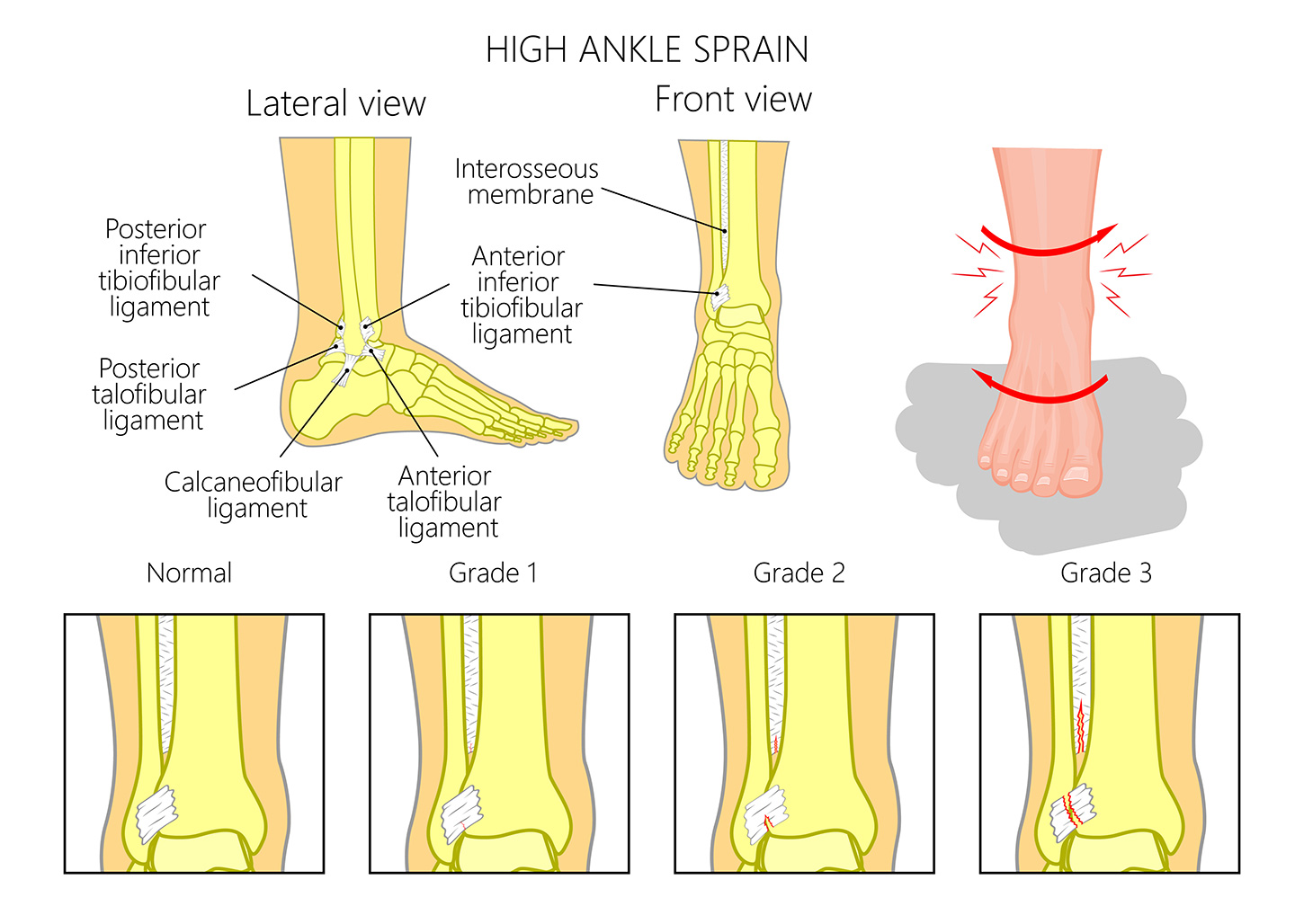
Pain that sits above the ankle joint — between the shin and the bony bumps on either side of the ankle — after a twisting injury is usually a high ankle sprain. This is a stretch or tear of the syndesmosis, the strong ligament complex holding the two lower leg bones together, rather than the more common sprain on the outside of the ankle. It’s typically caused by the foot twisting outward while planted, and it usually takes longer to settle than a standard ankle sprain.
What this means
“High ankle sprain” and “syndesmosis injury” describe the same thing: damage to the ligaments joining the tibia and fibula (the two lower leg bones) just above the ankle joint itself. It’s a different structure to the ligaments on the outside of the ankle that are injured in a typical rolled ankle.
What causes a high ankle sprain?
It usually happens when the foot is planted and the leg rotates over it — a common mechanism in football, netball, skiing and other contact or pivoting sports, or from a heavy tackle or collision. It can also occur alongside a fracture in higher-force injuries, which is why a proper assessment matters.
How is it different from a regular ankle sprain?
The pain sits higher up, above the ankle joint line, rather than on the outside of the foot. It’s also usually more painful to push the foot and lower leg into rotation, and weight-bearing tends to be more limited in the first few days. Because the injured ligaments help stabilise the whole lower leg, high ankle sprains generally take longer to recover than the more common lateral ankle sprain.
When should I get it checked urgently?
See a physio promptly if you can’t take any weight through the leg, if swelling and bruising are significant, or if the ankle feels unstable. A thorough hands-on assessment — including the specific tests used to check the syndesmosis ligaments — is usually enough to guide early management, and your physio will arrange imaging or a further medical opinion if there’s any concern about an associated fracture.
How is it treated?
Early management focuses on protecting the joint (sometimes in a boot, occasionally with crutches for more significant injuries) while starting gentle movement as pain allows. From there, a graduated physio program rebuilds range of motion, calf and lower leg strength, and balance/proprioception, before a structured return to running, cutting and pivoting.
What tends to aggravate it, and what helps ease it?
Rotating or pivoting movements, pushing off to change direction, and rising onto your toes tend to aggravate a high ankle sprain, since these movements stress the syndesmosis directly. In the early stages, protected weight-bearing (in a boot or with crutches if advised), avoiding twisting movements, and gentle pain-free range-of-motion tend to ease symptoms most.

How long until I’m back to sport?
Recovery is more variable than a standard ankle sprain and commonly takes six to twelve weeks depending on severity, with higher-grade injuries taking longer. Returning too early is one of the most common reasons these injuries drag on, so a guided, staged return matters.
Who’s behind this advice
Reviewed by: Core Healthcare Sorrento 2026
Related reading
• I rolled my ankle inward — why does the outside hurt?
• My ankle keeps giving way months after a sprain — what’s going on?
• Inside-of-ankle pain after a sprain — what should I know?
Next step
Waiting it out or simply resting rarely fixes the underlying cause, and the longer symptoms are left unaddressed, the more they tend to affect strength, movement and confidence — often making recovery slower than it needed to be. A timely assessment gives you a clear diagnosis and a specific plan, so you can start actively recovering rather than hoping it settles on its own.
Book an assessment with a physiotherapist at your nearest Core Healthcare clinic across Brisbane, Logan, the Gold Coast and Northern NSW, or ask your physio about this at your next session.