

Clinical name: Medial ankle ligament sprain (deltoid ligament injury)
Direct answer
Pain on the inside of the ankle after a twisting injury usually points to a sprain of the deltoid ligament — a strong, fan-shaped ligament that supports the inner ankle. It’s less common than an outer-ankle sprain, tends to result from the foot rolling outward, and because the deltoid ligament is thicker and stronger, these injuries are sometimes accompanied by a fracture, so they’re worth getting properly assessed.
What this means
The “deltoid ligament” is the ligament group on the inside of the ankle. A sprain here means those fibres have been stretched or partially torn, usually from the foot and ankle rolling outward (eversion) rather than the inward-rolling movement behind most ankle sprains.
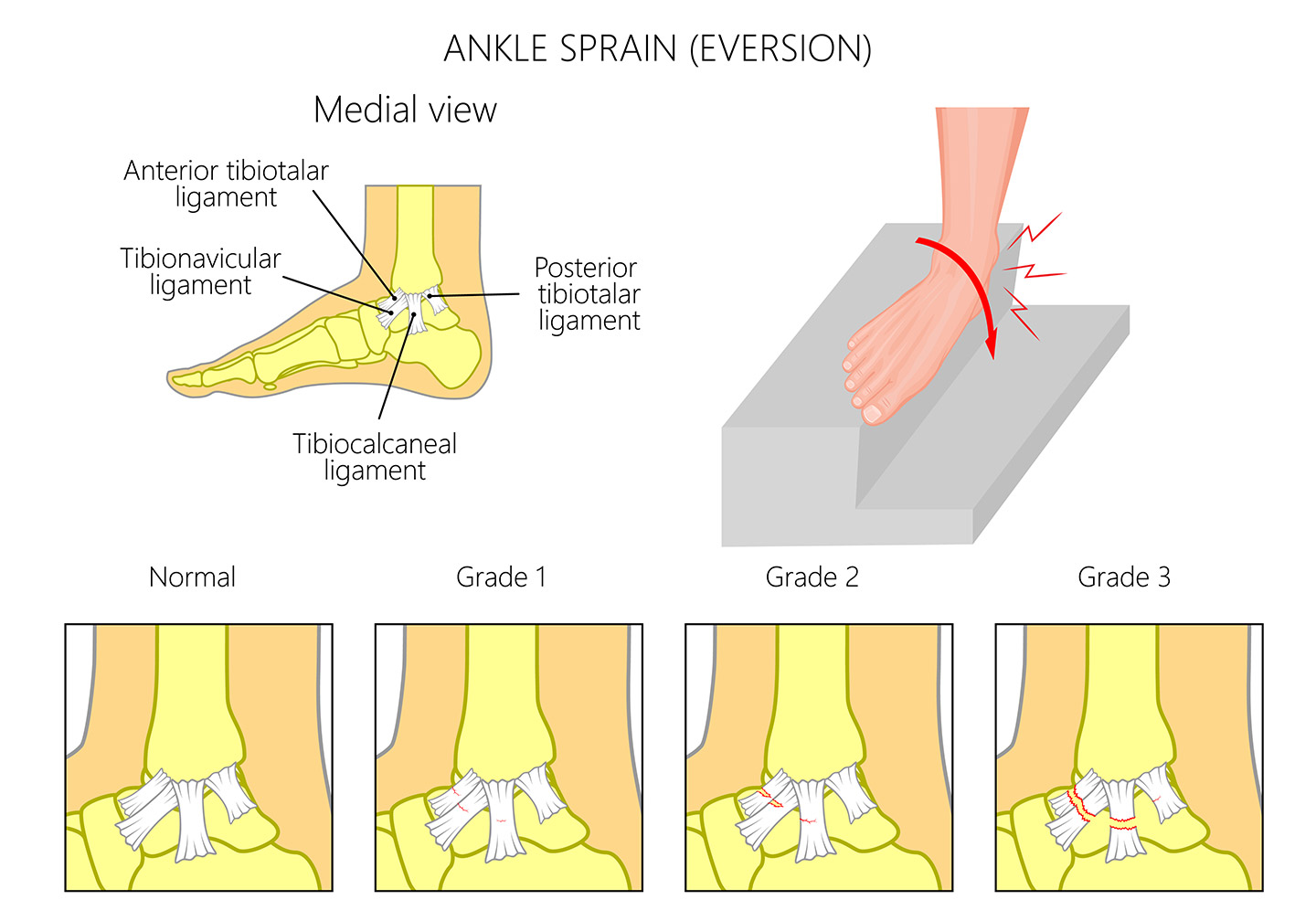
What causes a medial ankle sprain?
It typically follows the foot rolling outward — for example landing awkwardly, stepping off an uneven surface, or a knock to the outside of the leg that forces the ankle inward. It’s seen less often than lateral (outer) sprains but can occur alongside other injuries such as a high ankle sprain or a fibula fracture.
How do I know if it’s more than a sprain?
Because the deltoid ligament is strong, a forceful eversion injury can also fracture the fibula or the inner ankle bone (medial malleolus). Marked bony tenderness, an inability to take four steps unaided, or significant swelling around the bone itself are reasons for a prompt physio assessment, who can arrange imaging if a fracture needs to be ruled out, rather than assuming it’s a straightforward sprain.
How is it treated?
Mild sprains are managed with relative rest, protection from further rolling, and early guided movement. Physio treatment focuses on restoring ankle range of motion, strengthening the muscles that support the inside of the ankle (particularly tibialis posterior), and retraining balance, before building back into walking, running and sport-specific movement.
What tends to aggravate it, and what helps ease it?
Rolling the foot outward, standing or walking on uneven or sloped ground, and quick side-to-side movements tend to aggravate a medial ankle sprain. Supportive footwear or taping, controlled weight-bearing on flat ground, and avoiding movements that push the foot outward tend to help while it settles.

How long does it take to recover?
Straightforward medial ligament sprains often improve over four to eight weeks, though this varies with severity and whether other structures are involved. A physio assessment early on helps set realistic expectations and a plan to avoid re-injury.
Who’s behind this advice
Reviewed by: Core Healthcare Sorrento 2026
Related reading
• Ankle pain above the joint after rolling it — what could it be?
• My ankle keeps giving way months after a sprain — what’s going on?
• I rolled my ankle inward — why does the outside hurt?
Next step
Waiting it out or simply resting rarely fixes the underlying cause, and the longer symptoms are left unaddressed, the more they tend to affect strength, movement and confidence — often making recovery slower than it needed to be. A timely assessment gives you a clear diagnosis and a specific plan, so you can start actively recovering rather than hoping it settles on its own.
Book an assessment with a physiotherapist at your nearest Core Healthcare clinic across Brisbane, Logan, the Gold Coast and Northern NSW, or ask your physio about this at your next session.