
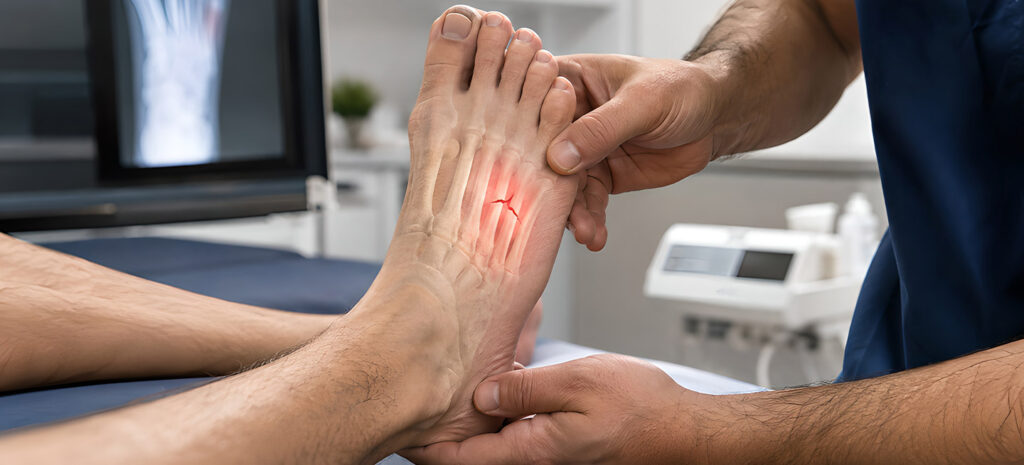
Shin or foot pain that won’t ease with rest — is it more than shin splints?
Clinical name: Stress fracture of the tibia or foot
Direct answer
Bone pain that’s sharply focused on one spot, doesn’t ease with rest, and may even be worse at night or first thing in the morning can indicate a stress fracture — a tiny crack in the bone caused by repetitive load outpacing the bone’s ability to repair itself. It’s a step up from shin splints in severity and needs load removed from the area while it’s assessed, rather than being trained through.
What this means
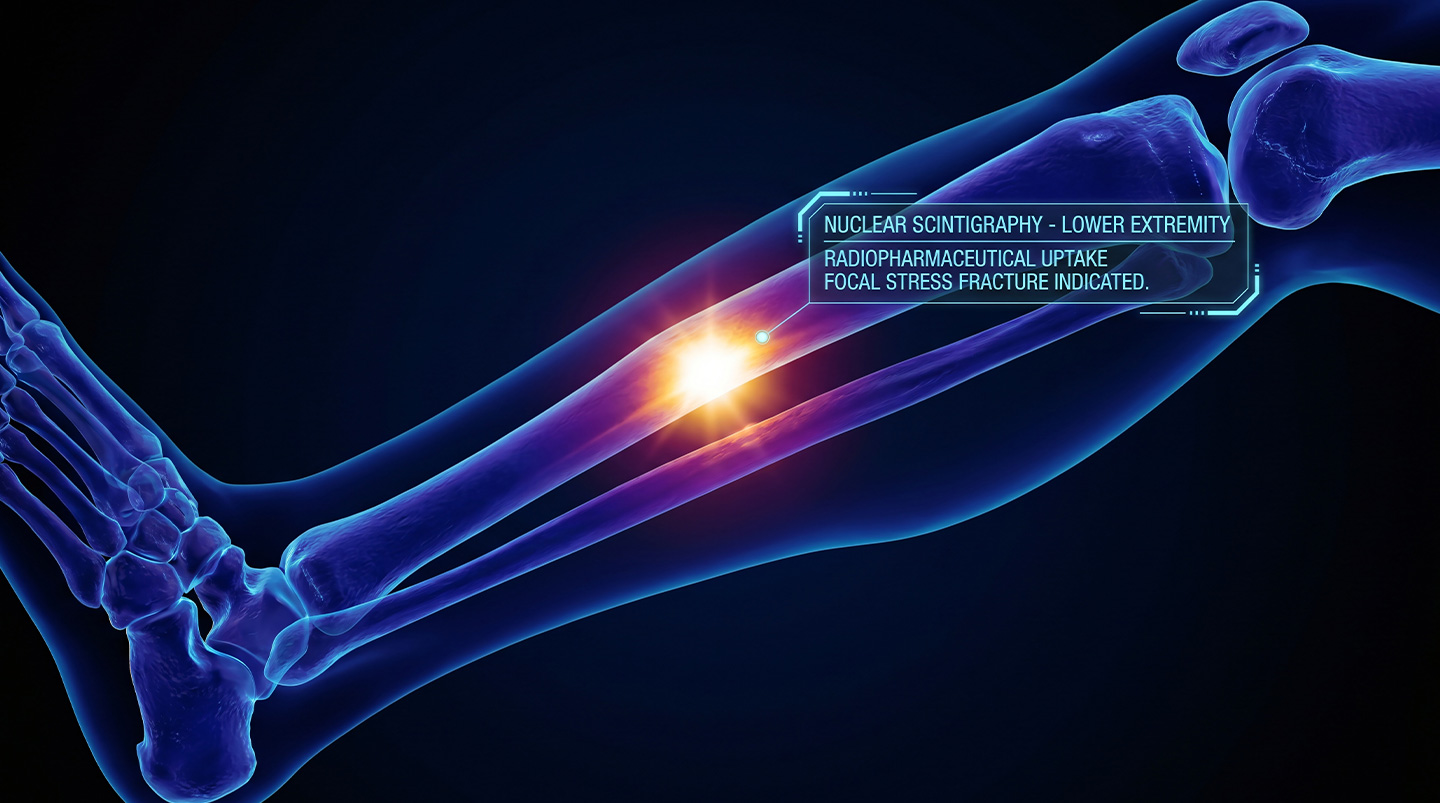
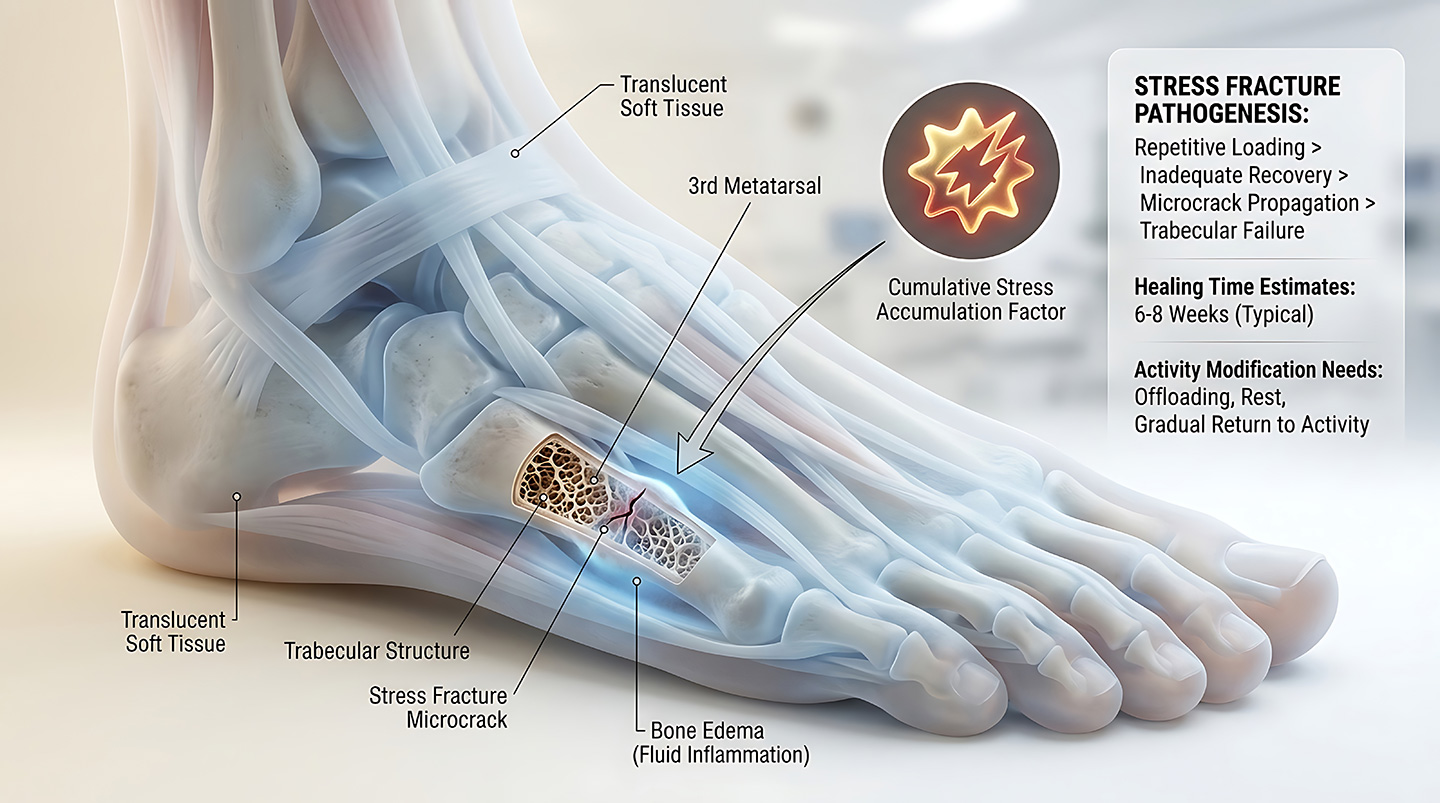
A “stress fracture” is a small, often hairline crack in a bone, distinct from a break caused by a single traumatic event. It develops gradually from repeated impact, most commonly in the shin, foot bones (metatarsals) or heel in runners and jumping-sport athletes.
How is this different from shin splints?
Shin splints usually cause a broader ache along the shin that settles with rest between sessions. A stress fracture tends to be a precise, pinpoint spot of tenderness that persists or worsens with rest and often hurts when you push directly on that spot or hop on the leg. Because the two can look similar in the early stages, an assessment — sometimes with imaging such as an MRI or bone scan — is the reliable way to tell them apart.
Who is most at risk?
Distance runners and athletes in jumping or repetitive-impact sports are most commonly affected, especially after a rapid increase in training load. Factors like low energy availability/nutrition, low bone density, and biomechanical issues in the foot or running gait can also increase risk and are worth discussing as part of a full assessment.
How is a stress fracture treated?
The priority is reducing load through the bone — this might mean a period of non-impact cross-training, a protective boot, or crutches in more significant cases, depending on the site and severity. Physio-guided rehab then rebuilds capacity gradually, alongside addressing training load, footwear, strength and any nutritional or biomechanical contributors, to reduce the risk of recurring.
What tends to aggravate it, and what helps ease it?
Continuing to run, jump or load the area through pain — including hopping on the spot or pressing directly on the tender site — will aggravate a stress fracture and can slow healing. Following the offloading plan your physio sets (a protective boot, crutches or reduced weight-bearing, as advised) and switching to genuinely non-impact cross-training once cleared are what actually allow it to heal.
How long until I can run again?
Recovery is typically six to twelve weeks depending on the bone involved and severity and return to running needs to be staged and monitored rather than an all-or-nothing return. Some sites (such as the navicular bone in the foot) heal more slowly and need closer management.
Who’s behind this advice
Reviewed by: Core Healthcare Sorrento 2026
Related reading
• Shin pain when running — is it shin splints?
• Big toe pain and stiffness after push-off — is this turf toe?
• Heel and Achilles pain when walking or running — what’s causing it?
Next step
Waiting it out or simply resting rarely fixes the underlying cause, and the longer symptoms are left unaddressed, the more they tend to affect strength, movement and confidence — often making recovery slower than it needed to be. A timely assessment gives you a clear diagnosis and a specific plan, so you can start actively recovering rather than hoping it settles on its own.
Book an assessment with a physiotherapist at your nearest Core Healthcare clinic across Brisbane, Logan, the Gold Coast and Northern NSW, or ask your physio about this at your next session.