
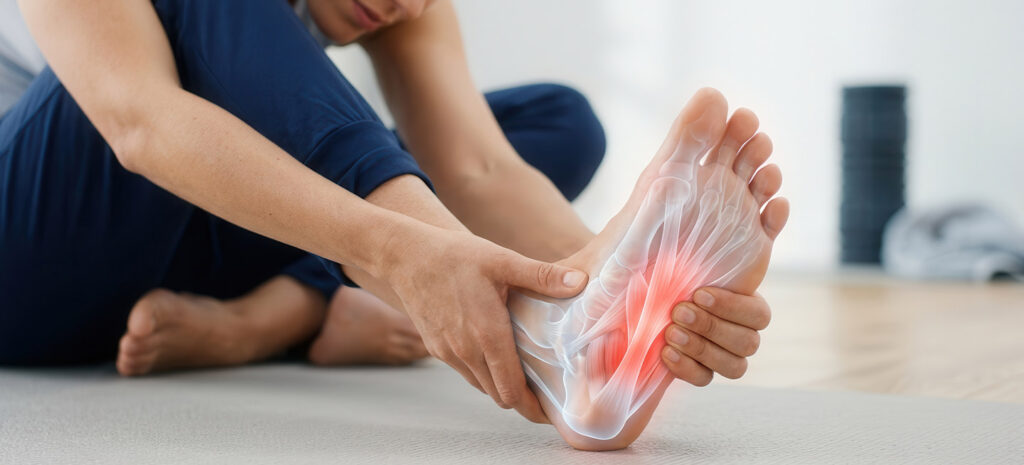
Clinical name: Plantar fasciitis (plantar heel pain)
Direct answer
Sharp or aching pain under the heel that’s at its worst with the first steps out of bed, and again after sitting for a while, is the classic pattern of plantar fasciitis — overload of the plantar fascia, the thick band of tissue running along the bottom of the foot from the heel to the toes. It’s one of the most common causes of heel pain and usually responds well to a targeted physio program.
What this means
The “plantar fascia” is the strong, flat band of connective tissue supporting the arch of the foot. “Plantar fasciitis” describes pain and overload changes in this tissue, typically where it attaches at the heel bone.
What causes plantar fasciitis?
It’s usually related to a sudden increase in time spent standing or walking, a change of footwear or work surface, weight gain, or reduced calf and foot muscle strength and flexibility. It’s also common in runners after a jump in training volume or a switch to a very different shoe.
Why is it worse in the morning?
Like the Achilles tendon, the plantar fascia tightens overnight while it’s unloaded, so the first steps stretch it suddenly and sharply — this is one of the most reliable signs pointing to plantar fasciitis rather than another cause of heel pain.
What actually helps?
A combination of calf and foot strengthening, addressing footwear and, where relevant, standing/walking load at work, and specific plantar fascia and calf loading exercises tend to work best. Stretching alone often gives short-lived relief; building genuine strength and tolerance in the tissue is what changes things longer term. Supportive footwear or orthotics can help settle symptoms while the underlying capacity is rebuilt.
What tends to aggravate it, and what helps ease it?
Walking barefoot on hard floors, standing for long periods, unsupportive footwear, and a sudden increase in walking or running volume tend to aggravate plantar fasciitis. Supportive footwear or orthotics, calf and foot strengthening, and avoiding barefoot walking on hard surfaces during a flare-up tend to help it settle.

How long until it improves?
Many people notice a meaningful improvement within six to eight weeks of consistent treatment, though more persistent cases can take several months, particularly if it’s been present for a long time before treatment starts. Early assessment tends to shorten that timeline.
Who’s behind this advice
Reviewed by: Core Healthcare Sorrento 2026
Related reading
• Heel and Achilles pain when walking or running — what’s causing it?
• Shin pain when running — is it shin splints?
• My ankle keeps giving way months after a sprain — what’s going on?
Next step
Waiting it out or simply resting rarely fixes the underlying cause, and the longer symptoms are left unaddressed, the more they tend to affect strength, movement and confidence — often making recovery slower than it needed to be. A timely assessment gives you a clear diagnosis and a specific plan, so you can start actively recovering rather than hoping it settles on its own.
Book an assessment with a physiotherapist at your nearest Core Healthcare clinic across Brisbane, Logan, the Gold Coast and Northern NSW, or ask your physio about this at your next session.