
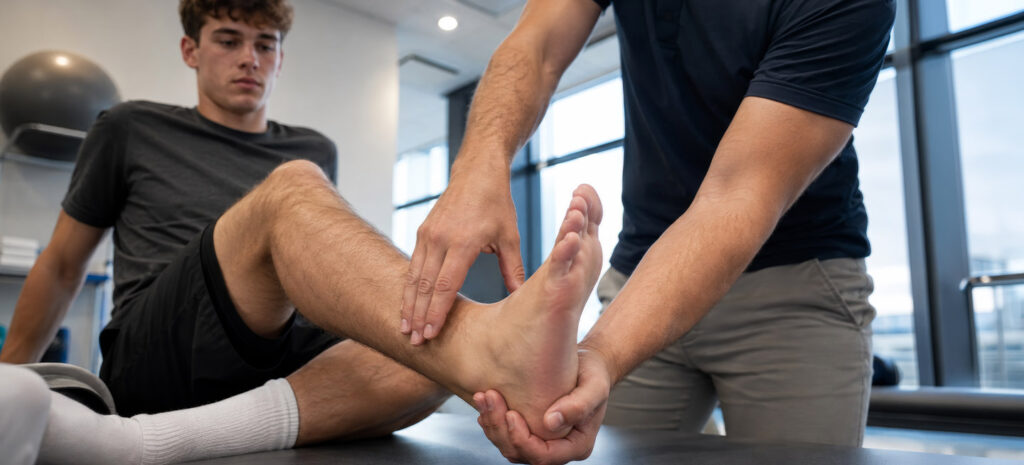
My ankle keeps giving way months after a sprain — what’s going on?
Clinical name: Chronic ankle instability vs. general joint hypermobility
Direct answer
An ankle that keeps rolling, giving way, or feeling unsteady long after the original sprain has healed usually points to chronic ankle instability — a combination of loosened ligaments and reduced balance/control around the joint, rather than the ankle simply never having healed. It’s a different picture to general hypermobility, where several joints throughout the body are naturally more flexible than average, and each needs a different approach.
What this means
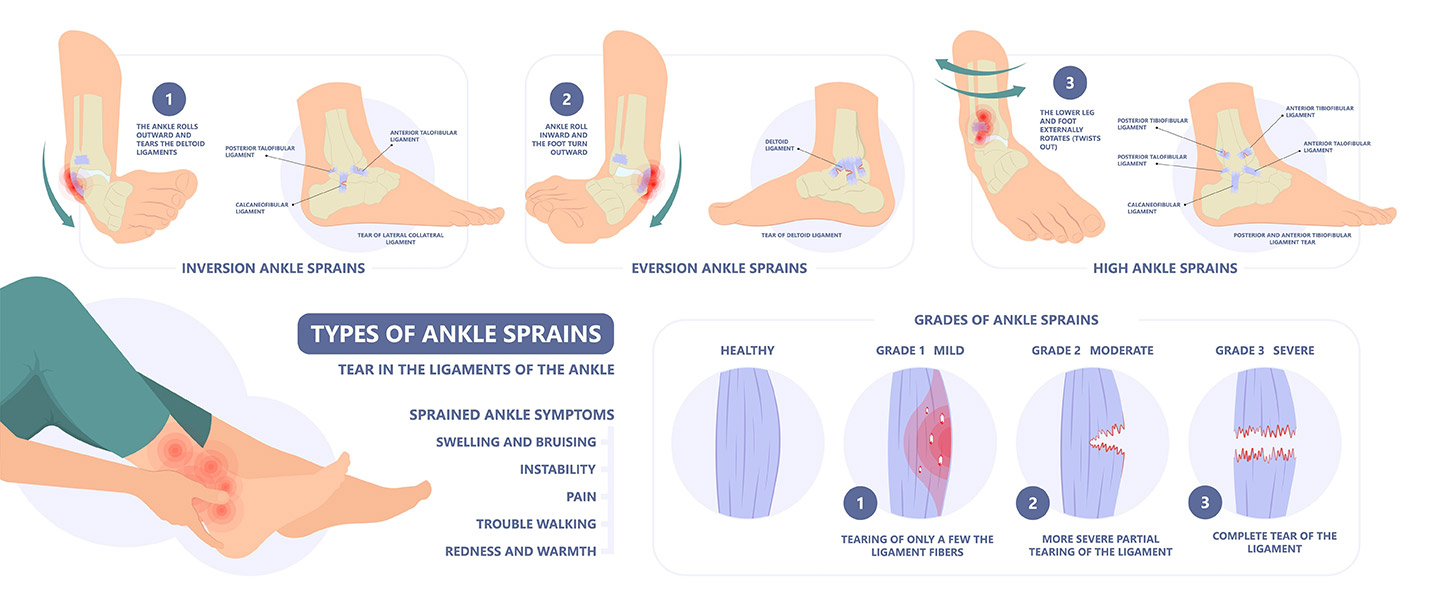
“Chronic ankle instability” means the ankle repeatedly gives way or feels unstable, usually because a previous sprain didn’t fully rehabilitate the ligaments, strength and balance control around the joint. “Hypermobility” is a broader trait, present from a young age and usually affecting multiple joints, where ligaments allow more movement than average — it isn’t caused by an old injury.
How can I tell which one I have?
A history of one or more significant ankle sprains, instability limited mainly to that ankle, and giving way on uneven ground or during sport points toward chronic instability. Looser joints throughout the body — knees, elbows, fingers — that have felt this way since childhood or adolescence, without a clear injury history, points more toward general hypermobility. Many people have some overlap, which is why an assessment helps clarify the main driver.
Why does this happen after a sprain?
After a sprain, the ligaments may heal with some residual laxity, meaning they are not as taut as they were before. In addition, balance and muscular control around the ankle can remain impaired. The culmination of these factors contributes to an ankle that feels unstable.
What can be done about it?
For chronic instability, physio-led rehab targeting balance, proprioception (the ankle’s sense of position), and peroneal (outer lower leg) strength is effective for most people and is the recommended first step before considering surgical options. For hypermobility-related ankle symptoms, the focus shifts to building strength and control around the naturally looser joint rather than trying to “tighten” the ligaments themselves. Taping or bracing can help during the rebuilding phase or higher-risk activities.
What tends to bring on an episode, and what helps?
Uneven terrain, unsupportive or worn footwear, fatigue late in a run or game, and quick changes of direction without a proper warm-up are the most common triggers for a giving-way episode. Taping or bracing during higher-risk activity, choosing supportive footwear, and staying consistent with balance and strength work between episodes all help reduce how often it happens.
Will I need surgery?
Most people improve significantly with a structured rehabilitation program. Surgery to reconstruct or tighten the ligaments is generally only considered when a genuine, thorough rehab program hasn’t resolved ongoing instability.
Who’s behind this advice
Reviewed by: Core Healthcare Sorrento 2026
Related reading
• How can I stop rolling my ankle so often?
• I rolled my ankle inward — why does the outside hurt?
• Foot or ankle stiffness as I get older — is it arthritis?
Next step
Waiting it out or simply resting rarely fixes the underlying cause, and the longer symptoms are left unaddressed, the more they tend to affect strength, movement and confidence — often making recovery slower than it needed to be. A timely assessment gives you a clear diagnosis and a specific plan, so you can start actively recovering rather than hoping it settles on its own.
Book an assessment with a physiotherapist at your nearest Core Healthcare clinic across Brisbane, Logan, the Gold Coast and Northern NSW, or ask your physio about this at your next session.