


Clinical name: Foot and ankle osteoarthritis (including hallux rigidus of the big toe)
Gradually worsening ache, stiffness and reduced movement in the ankle or big toe — particularly if it’s been building over months or years rather than starting with a single injury — is commonly osteoarthritis, wear-related change in the joint surfaces. In the big toe specifically, this is often called hallux rigidus. It’s a genuinely common cause of foot and ankle pain, especially from midlife onward or after an old fracture or significant ligament injury.
“Osteoarthritis” is a condition involving changes throughout a joint, but it isn’t just about wearing down — it’s actually the joint trying to repair itself. While the cartilage cushion thins, the body works to adapt, and with the right movement, we can help the joint stay strong and lubricated. In the ankle it’s frequently “post-traumatic” — meaning it follows an earlier fracture or major ligament injury, sometimes by many years — rather than developing from wear alone. “Hallux rigidus” is the same process affecting the big toe’s main joint, causing stiffness and reduced upward bend of the toe.
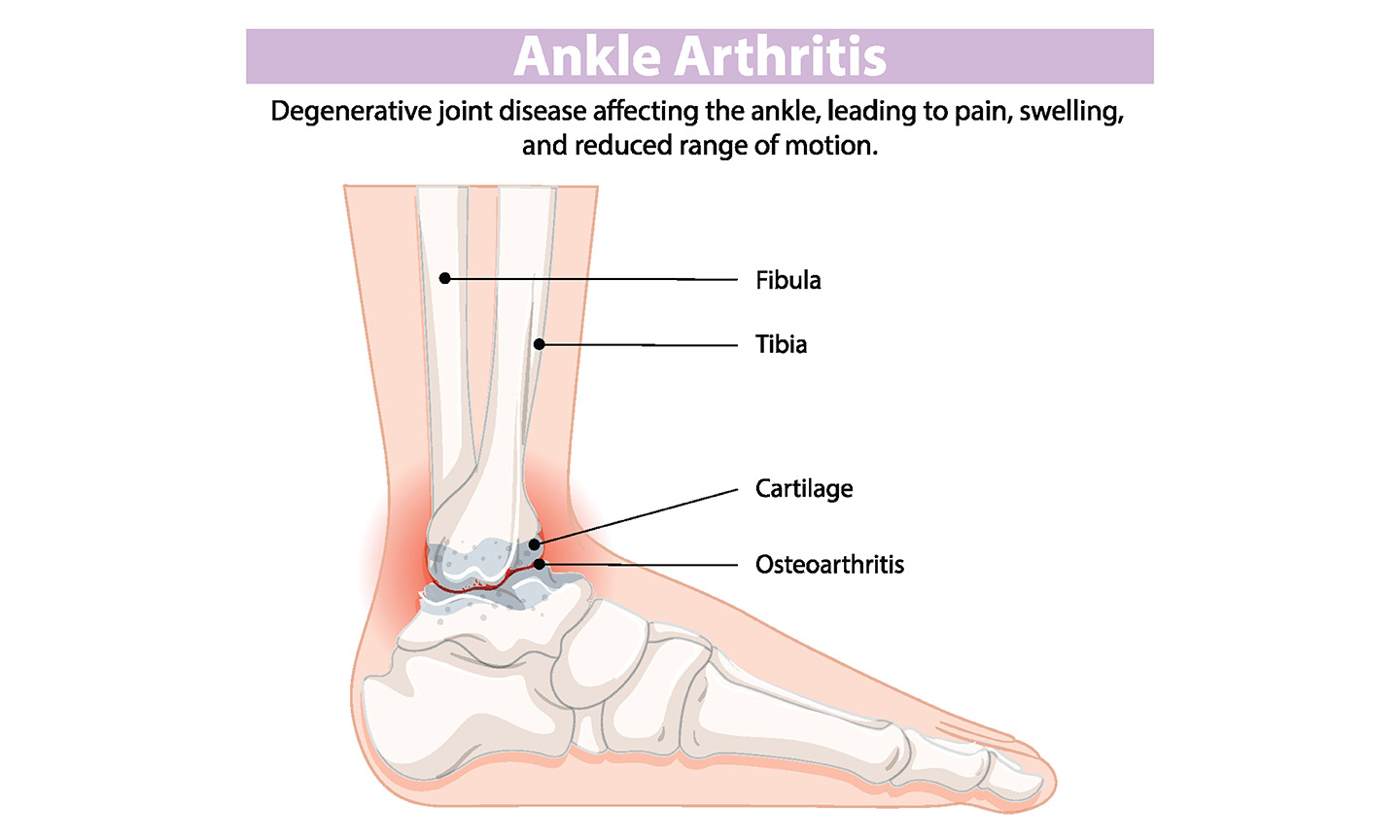
It’s the same underlying process as hip or knee osteoarthritis, but the pattern in the foot and ankle is a bit different: ankle arthritis is more often linked to a specific past injury (a fracture or a series of significant ligament sprains) than to general wear, while big toe arthritis (hallux rigidus) tends to develop from a combination of joint shape, previous injury, and repetitive load over time.
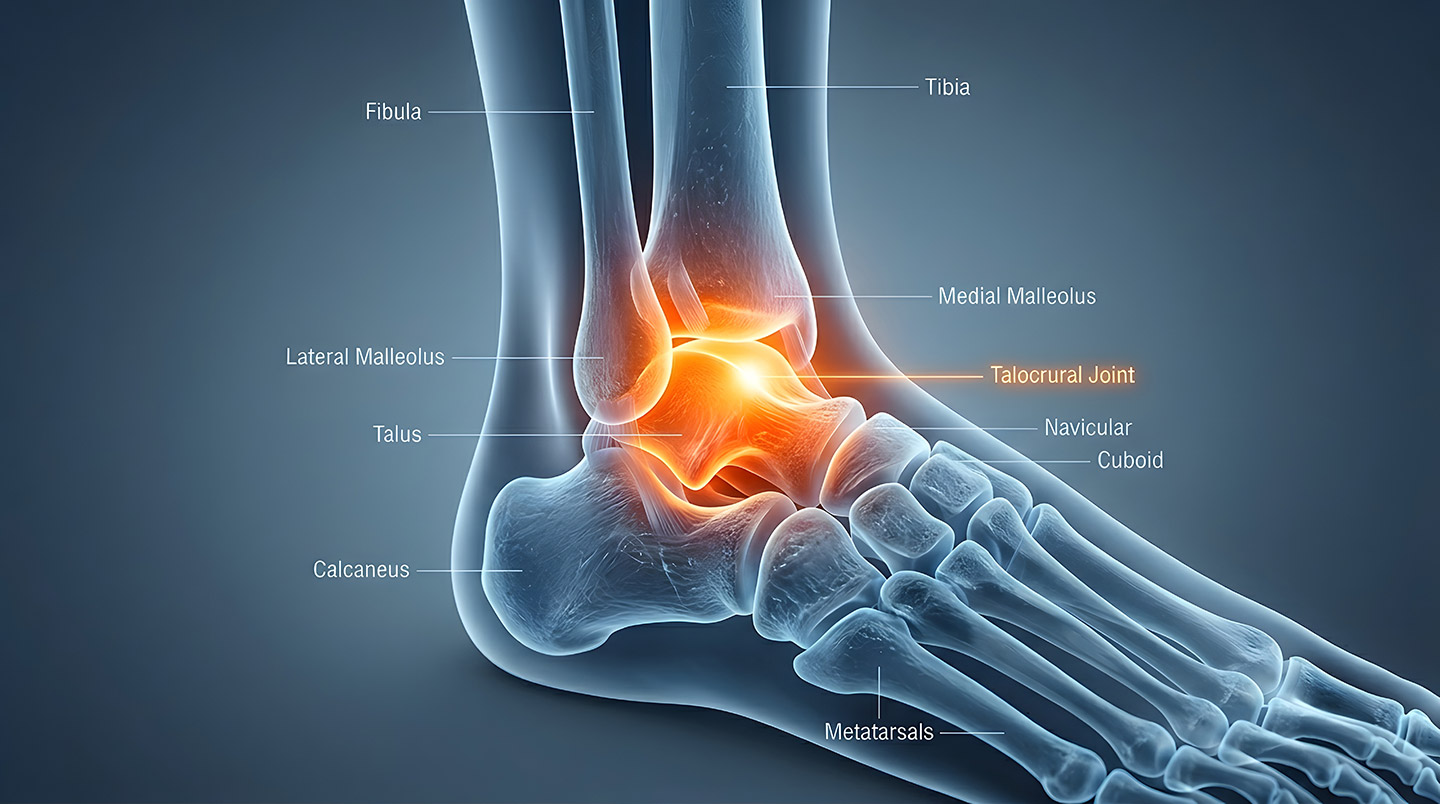
Stiffness that’s worse first thing in the morning or after rest and eases with gentle movement, aching that builds through the day with walking or standing, reduced range of motion (a big toe that won’t bend back as far, or an ankle that feels tight), and sometimes visible swelling or bony prominence around the joint.
Bone health is a separate issue from arthritis but is worth understanding: reduced bone density can increase the risk of stress fractures (see our related article) and can make fractures more likely from lower-force injuries. It doesn’t directly cause arthritis, but maintaining bone health through weight-bearing activity, adequate calcium/vitamin D and, where relevant, medical management is a sensible part of overall foot and ankle care as we get older.
Physiotherapy management focuses on keeping the joint moving within a comfortable range, building strength in the surrounding muscles to offload the joint, footwear adjustments (a stiffer-soled shoe can reduce big toe strain, for example), and activity modification rather than avoidance. Many people manage arthritis symptoms well for years with this approach and don’t progress to needing surgery.
High-impact activity such as running or jumping, prolonged standing or walking on hard surfaces, unsupportive or overly flexible footwear, and cold weather can all aggravate arthritic joint pain. Low-impact activity like swimming or cycling, supportive and appropriately firm-soled footwear, regular gentle movement to avoid stiffness, and warming the joint before activity tend to ease symptoms.
Surgery is generally considered when pain and stiffness are significantly limiting daily life despite a genuine trial of physiotherapy, footwear changes and activity modification — see our related article on common foot and ankle surgeries for what those options look like and what recovery involves.
Reviewed by: Core Healthcare Sorrento 2026
• What does recovery look like after foot or ankle surgery?
• Shin or foot pain that won’t ease with rest — is it more than shin splints?
• Big toe pain and stiffness after push-off — is this turf toe?
Waiting it out or simply resting rarely fixes the underlying cause, and the longer symptoms are left unaddressed, the more they tend to affect strength, movement and confidence — often making recovery slower than it needed to be. A timely assessment gives you a clear diagnosis and a specific plan, so you can start actively recovering rather than hoping it settles on its own.
Book an assessment with a physiotherapist at your nearest Core Healthcare clinic across Brisbane, Logan, the Gold Coast and Northern NSW, or ask your physio about this at your next session.
If you’re a Health Psychologist who finds meaning in helping people rebuild their lives after injury, this role is built for you.
Core Healthcare is looking for an experienced Health Psychologist to join our multidisciplinary Allied Health team in Brisbane. You’ll lead Adjustment to Injury Counselling (ATIC) and Psychological Return to Work (PRT) as part of a structured Chronic Pain Management Program — supporting patients navigating work-related injuries, motor vehicle accidents, or DVA-funded claims.
This isn’t a solo practice. You’ll be embedded in a genuine multidisciplinary team, working shoulder-to-shoulder with chronic pain physiotherapists, exercise physiologists, pain medicine specialists, and return-to-work rehabilitation providers to deliver holistic, evidence-based care.
Your focus will be helping patients adapt — mentally and emotionally — to persistent pain, so they can rebuild function and return to meaningful work and life.
Day to day, you’ll be:
✓Delivering ATIC therapy within a structured Pain Management Program
✓Conducting Psychological Return to Work (PRT) assessments and interventions for injured workers on worker’s compensation
✓Collaborating on case reviews, treatment planning, and outcome monitoring with your MDT colleagues
✓Providing a blend of face-to-face and telehealth consultations to an established patient caseload
✓Producing clear, timely clinical documentation — including Provider Management Plans and insurer reports — in line with worker’s compensation requirements
We want this to be a role you genuinely look forward to. Here’s what you can expect:
✓Competitive remuneration reflecting your specialist skills and experience
✓Flexible hours — 1 to 3 days per week with flexible scheduling, or full-time if preferred
✓A ready-made caseload — no cold starts, no slow build
✓Real MDT integration — a connected, experienced team that actually collaborates
✓Blended delivery — face-to-face at our Brisbane or Beenleigh clinics, plus telehealth
✓Full admin support — so you can stay focused on your clinical work
You’re a registered psychologist with a genuine passion for chronic pain and injury adjustment — someone who thrives in a collaborative environment and understands the human complexity behind every claim.
You’ll bring:
• Current AHPRA registration and valid professional indemnity insurance (Health Psychology endorsement preferred)
• At least 5 years’ experience as a psychologist
• Demonstrated experience in ATIC, particularly with chronic and complex pain presentations
• A solid understanding of the worker’s compensation system and multidisciplinary pain programs
• Interest in PRT — including functional capacity, psychosocial barriers, and goal-oriented recovery planning
• The right to live and work in Queensland
Bonus points if you’re trained in EMDR — it’s not essential, but it’s highly valued here.
With over 7 clinic locations across Brisbane, Logan, the Gold Coast, and Northern NSW, Core Physiotherapy and Exercise Centres delivers specialist musculoskeletal and rehabilitative care through collaborative Allied Health teams. Our Pain Management Program brings together leading clinicians to support patients with complex injuries on their path to recovery.
Ready to make a real difference in complex care? We’d love to hear from you. Send your CV and a brief cover letter outlining your experience in chronic pain and injury adjustment to info@corehealthcare.com.au.
We know your first role often sets the tone for your entire career. That’s why we’ve built our reputation as an industry leader, designed to give you the skills, career progression, confidence, and support you need to succeed in private practice.
We are one of Healthia’s allied health brands, part of Australia’s leading integrated healthcare network of over 400 clinics. This means our team benefits from the support, resources, and professional development opportunities that come with being connected to a larger organization, while maintaining our specialized focus and community-centered approach.
We’re looking for driven new graduate Physiotherapists to join one of our seven private practice teams across Brisbane, Logan, and Gold Coast, with a strong focus on mentorship, development, and long-term career progression. Join a company where you’re more than just a graduate – you’re seen as our future clinical leaders and business owners.
We offer a comprehensive range of allied health services, including:
Ready to launch your physiotherapy career with purpose? Please submit your CV, cover letter explaining your interest in joining Core, and academic transcripts to info@corehealthcare.com.au.
Ready to elevate your physiotherapy career with a company that truly values your expertise? At Core, we don’t just offer jobs – we provide platforms for experienced clinicians to thrive, specialize, and lead.
We are one of Healthia’s allied health brands, part of Australia’s leading integrated healthcare network of over 400 clinics. This means you’ll have access to unparalleled resources, professional development, and career advancement opportunities while working within our close-knit, community-focused teams.
We’re seeking experienced Physiotherapists to join our seven private practice locations across Brisbane, Logan, and Gold Coast. Whether you’re looking to deepen your specialization, take on leadership roles, or explore business ownership opportunities, Core provides the pathway to achieve your professional goals.
We offer comprehensive allied health services, including:
Ready to launch your physiotherapy career with purpose? Please submit your CV, cover letter explaining your interest in joining Core, and academic transcripts to info@corehealthcare.com.au.