

Clinical name: Medial tibial stress syndrome (shin splints)
Direct answer
A dull, aching pain along the inner edge of the shin bone that builds during running or jumping and eases with rest is the classic pattern of shin splints — medically known as medial tibial stress syndrome. It’s an overload injury of the shin bone and the muscles attaching to it, most often triggered by a sudden increase in running volume, a change of surface, or worn-out footwear.
What this means
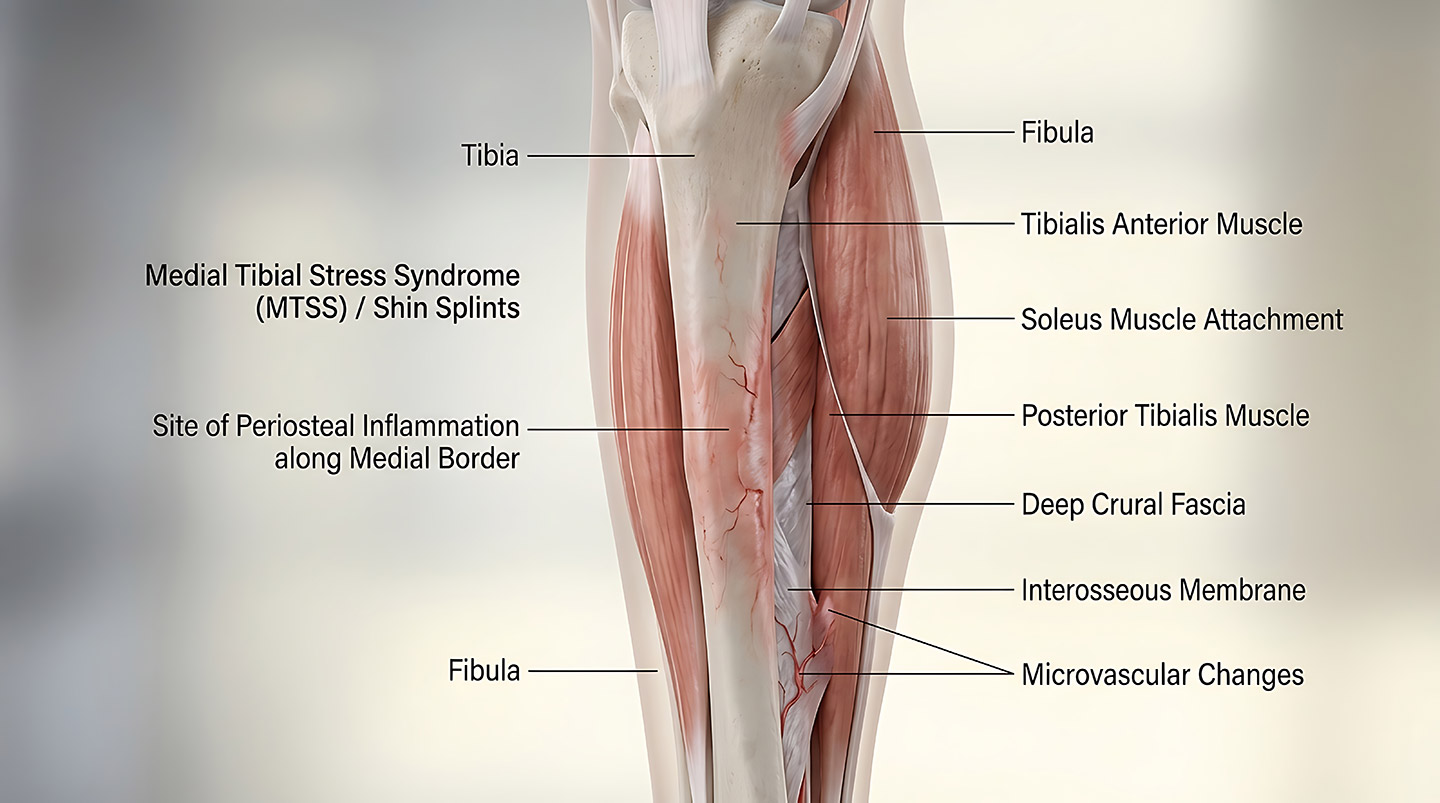
“Shin splints” is the everyday term for medial tibial stress syndrome — irritation and low-grade overload of the tibia (shin bone) and the tissue connecting to it, caused by repetitive impact outpacing the bone’s ability to adapt.
What causes shin splints?
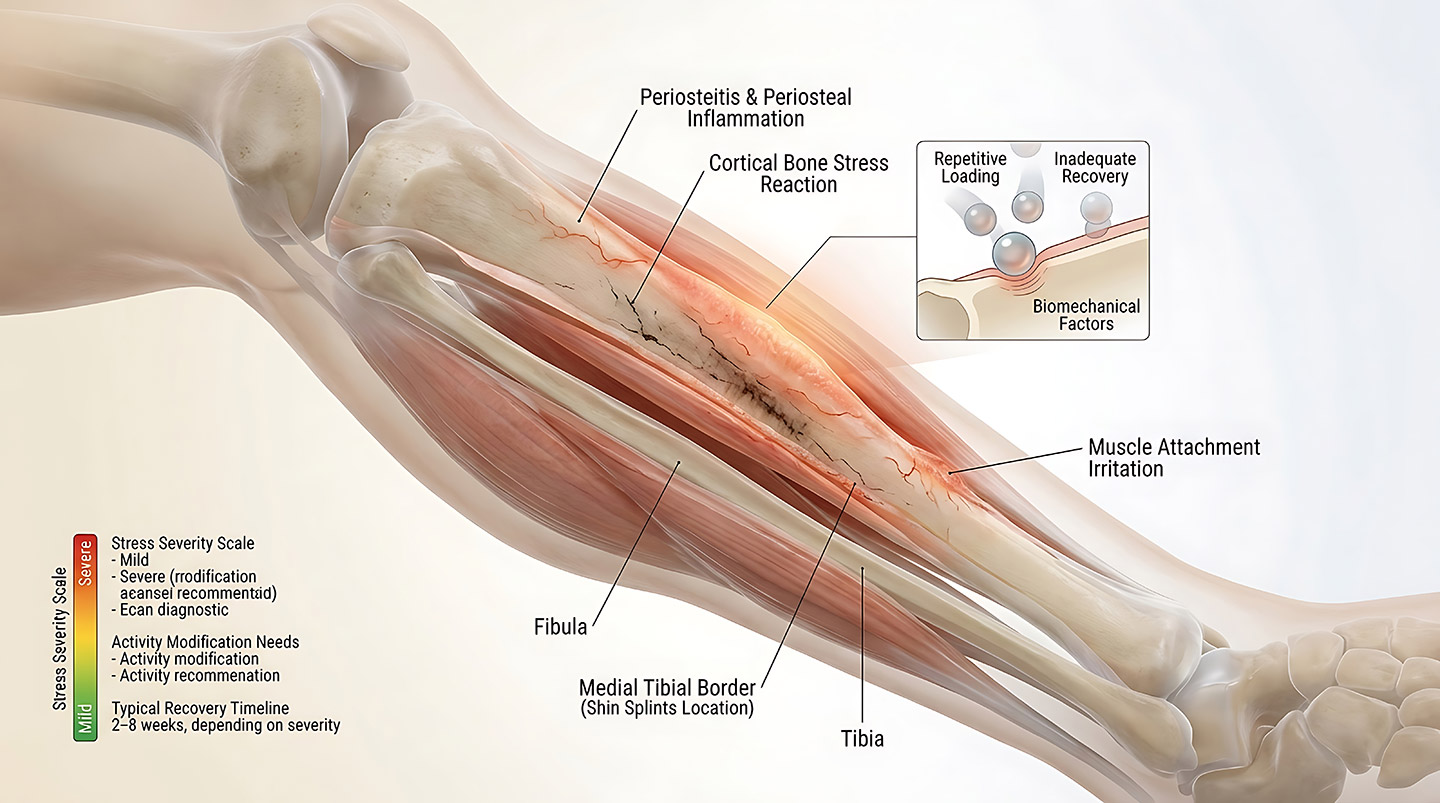
The most common trigger is doing too much, too soon — a sharp jump in running distance, speed, hill work, or a return to sport after time off. Worn shoes, hard or uneven surfaces, and reduced calf or foot strength can all add to the load the shin has to absorb.
How do I know it’s not something more serious?
Shin splints tend to cause pain over a broader area of the shin that eases with rest between sessions. Pain that’s sharply localised to one small spot, gets worse with rest, or is present at night is more typical of a stress fracture and needs a proper assessment before continuing to train through it — see our related article on stress fractures for the key differences.
How is it treated?
Management centres on adjusting training load rather than complete rest for most cases — reducing volume or intensity to a level that doesn’t provoke symptoms, then rebuilding gradually. Physio treatment addresses the contributing factors: calf and foot/ankle strength, running technique, footwear, and a structured return-to-run program.
What tends to aggravate it, and what helps ease it?
A sudden jump in running volume or intensity, hard surfaces, hill sessions, and worn-out shoes tend to aggravate shin splints. Reducing load to a level that doesn’t provoke symptoms — rather than stopping altogether — cross-training on a bike or in the pool to maintain fitness, and icing the area after activity tend to help it settle.
How long does recovery take?
Mild cases often settle within two to four weeks of appropriate load management; more persistent cases can take six to eight weeks or longer, particularly if training continues at a provocative level. Addressing the underlying cause is what prevents it recurring next season.
Who’s behind this advice
Reviewed by: Core Healthcare Sorrento 2026
Related reading
• Shin or foot pain that won’t ease with rest — is it more than shin splints?
• Heel and Achilles pain when walking or running — what’s causing it?
• Heel pain that’s worst in the morning — what could it be?
Next step
Waiting it out or simply resting rarely fixes the underlying cause, and the longer symptoms are left unaddressed, the more they tend to affect strength, movement and confidence — often making recovery slower than it needed to be. A timely assessment gives you a clear diagnosis and a specific plan, so you can start actively recovering rather than hoping it settles on its own.
Book an assessment with a physiotherapist at your nearest Core Healthcare clinic across Brisbane, Logan, the Gold Coast and Northern NSW, or ask your physio about this at your next session.