

Heel and Achilles pain when walking or running — what’s causing it?
Clinical name: Achilles tendinopathy
Direct answer
Pain, stiffness or thickening at the back of the heel or a little higher up the tendon — often worse first thing in the morning or at the start of exercise — is the typical picture of Achilles tendinopathy, an overload condition of the Achilles tendon rather than an inflammation that will simply pass with rest. It usually develops gradually, most often linked to a change in running volume, hill or speed work, or footwear.
What this means
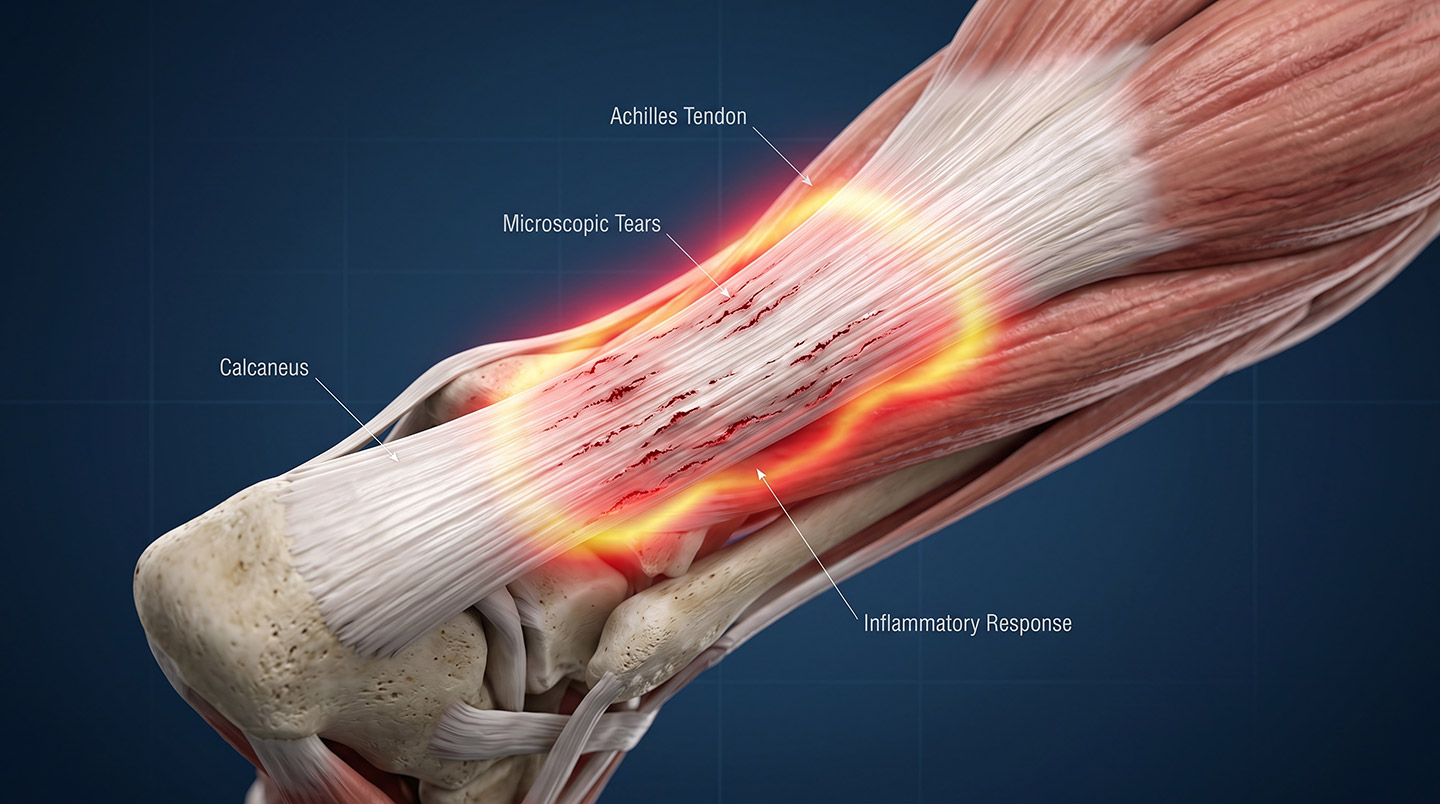
“Achilles tendinopathy” (previously often called Achilles tendinitis) describes changes in the structure of the Achilles tendon from load it hasn’t adapted to, causing pain, stiffness and sometimes visible thickening. It’s different from a sudden tendon tear or rupture, which happens abruptly and causes immediate, sharp pain and difficulty pushing off the foot.
What causes it?
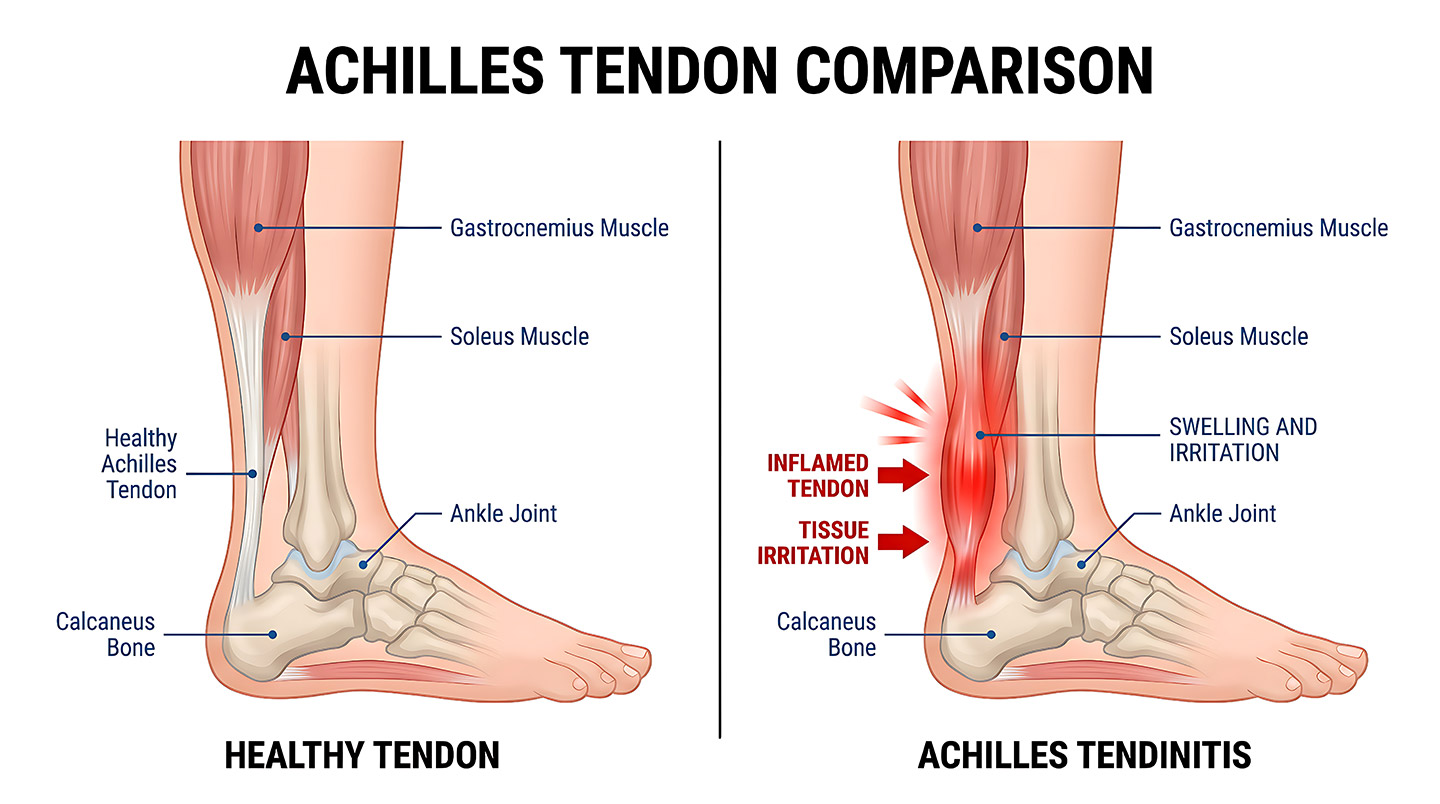
The most common driver is a training change the tendon hasn’t had time to adapt to — more running volume, added hills or speed sessions, a new pair of shoes, or returning to sport after a break. Calf tightness or weakness, and — for tendon pain right at the heel bone — bony irritation from footwear, can also contribute.
Why does it feel worse first thing in the morning?
Tendons stiffen overnight as they’re unloaded, so the first steps out of bed or after sitting for a while are often the most uncomfortable, easing somewhat as it warms up. This early-morning stiffness pattern is one of the more recognisable features of tendinopathy.
Should I rest it completely?
Complete rest usually isn’t the answer — tendons respond well to a gradually progressed loading program, and stopping activity altogether can make the tendon less tolerant of load when you return to it. The right amount and type of loading (often starting with controlled calf-raise style exercises) is best guided by a physio assessment, since too much too soon can aggravate it just as much as doing nothing.
What tends to aggravate it, and what helps ease it?
A sudden increase in hills, speed work or jumping activity, unsupportive footwear, and skipping a warm-up tend to aggravate Achilles tendinopathy. Controlled, progressive loading exercises (often starting with calf raises), a proper warm-up before activity, and — during flare-ups — footwear with a slight heel lift tend to ease symptoms.
How long does it take to settle?
Because tendon tissue adapts slowly, meaningful improvement often takes six to twelve weeks of consistent, well-dosed loading, with some cases taking longer if the tendon has been symptomatic for a long time before treatment starts. Sticking with a progressive program, rather than chasing quick fixes, gives the most reliable results.
Who’s behind this advice
Reviewed by: Core Healthcare Sorrento 2026
Related reading
• Heel pain that’s worst in the morning — what could it be?
• Shin pain when running — is it shin splints?
• Shin or foot pain that won’t ease with rest — is it more than shin splints?
Next step
Waiting it out or simply resting rarely fixes the underlying cause, and the longer symptoms are left unaddressed, the more they tend to affect strength, movement and confidence — often making recovery slower than it needed to be. A timely assessment gives you a clear diagnosis and a specific plan, so you can start actively recovering rather than hoping it settles on its own.
Book an assessment with a physiotherapist at your nearest Core Healthcare clinic across Brisbane, Logan, the Gold Coast and Northern NSW, or ask your physio about this at your next session.