

My back pain is worse with rest and better with movement — what does that mean?
Clinical name: Inflammatory back pain (including axial spondyloarthritis / ankylosing spondylitis)
Direct answer
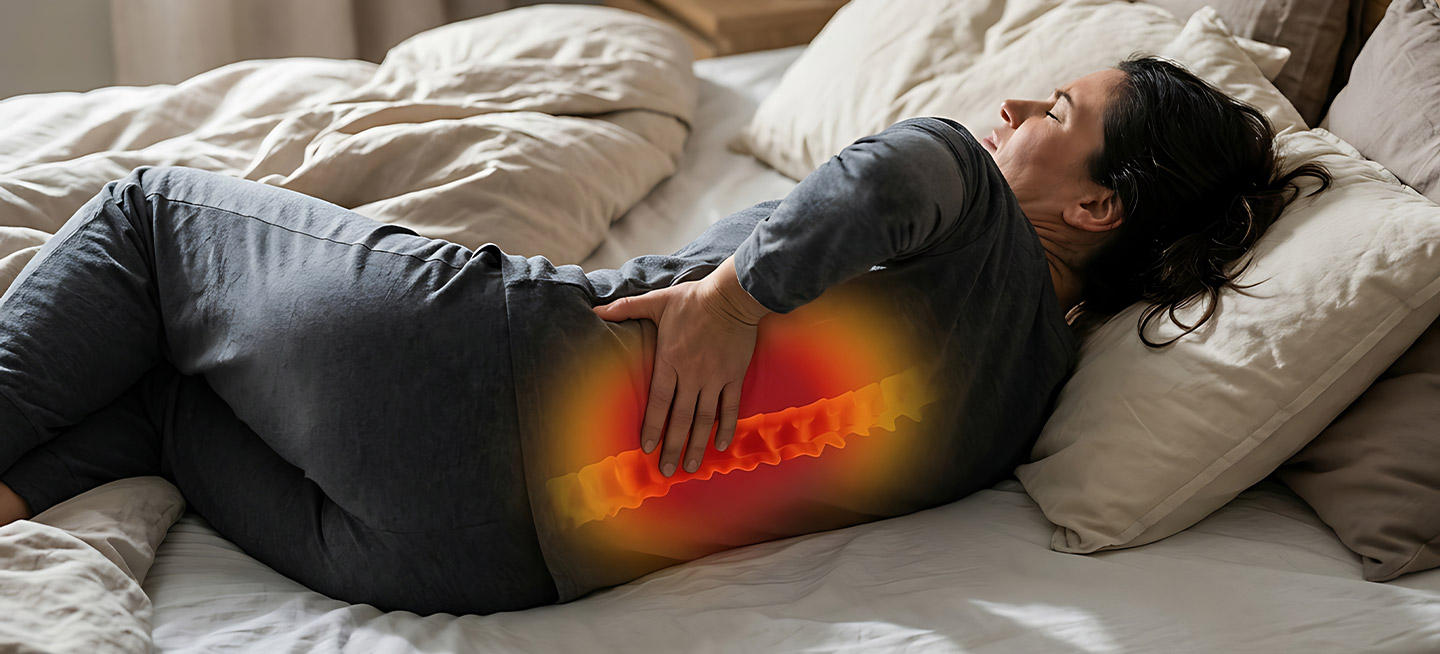
Most back pain gets worse with activity and better with rest — but a pattern of pain and stiffness that’s worse after rest or first thing in the morning (typically lasting more than 30 minutes) and improves with movement and exercise is a distinctive pattern worth flagging, since it can point toward an inflammatory cause rather than a typical mechanical strain. This is far less common than mechanical back pain, but picking it up early genuinely changes management.
What this means
“Inflammatory back pain” describes back pain driven by an inflammatory process affecting the spine’s joints, rather than mechanical overload of muscles, joints or discs. Axial spondyloarthritis (which includes ankylosing spondylitis) is the main condition in this category, and it typically starts in younger adults, often in the late teens to 40s.
What makes this pattern different from typical back pain?
The key distinguishing features are: pain and stiffness lasting more than 30 minutes after waking, symptoms that improve with movement and exercise but not with rest, pain that wakes you in the second half of the night, and a gradual onset before the age of 45 — the opposite pattern to most mechanical back pain, which tends to worsen with activity.

Are there other clues worth mentioning to a health professional?
A family history of ankylosing spondylitis or related conditions, a personal history of psoriasis, inflammatory bowel disease, or eye inflammation (uveitis), and a good response to anti-inflammatory medication are all additional clues that can support this pattern and are worth mentioning during an assessment.
What should I do if this sounds like my pattern?
Mention this specific pattern — morning stiffness over 30 minutes, improvement with movement, night pain — clearly during your physiotherapy assessment, as it changes the assessment approach and may prompt a referral for blood tests or imaging to investigate further, alongside starting appropriate physiotherapy management.
What tends to aggravate it, and what helps ease it?
Prolonged inactivity and rest tend to aggravate inflammatory back pain, which is the opposite of typical mechanical back pain. Regular movement and a consistent exercise program tend to ease symptoms and are a core part of long-term management alongside any medical treatment.
How is it managed?
Management typically combines medical treatment (often anti-inflammatory medication, coordinated with a rheumatologist) with an ongoing physiotherapy exercise program focused on spinal mobility and posture, since staying consistently active is one of the most effective long-term strategies for this condition.
Who’s behind this advice
Reviewed by: Core Healthcare Banyo 2026
Clinic services: Assessment and diagnosis of back pain and related symptoms (including leg, buttock and pelvic pain); manual therapy; individualised treatment and management planning based on your assessment findings; Pilates-based rehab classes, strengthening and exercise rehabilitation, including musculoskeletal and sports rehab; posture and workstation advice; women’s health physiotherapy for pregnancy-related back and pelvic pain.
Related reading
• My back feels stiff and achy as I get older — what should I do?
• Lower back pain — when should I worry?
• Will core strengthening actually help my back pain?
Next step
Back pain that’s left to “settle on its own” often takes longer to resolve and comes back more easily than back pain that gets an early, targeted assessment. A proper assessment identifies exactly what’s driving your symptoms and gets you started on a specific plan — not just advice to rest and see how it goes. Book a back assessment with a physiotherapist at any of Core Healthcare’s seven clinics across Brisbane, Logan, the Gold Coast and Northern NSW, or ask your physio about this at your next session.