
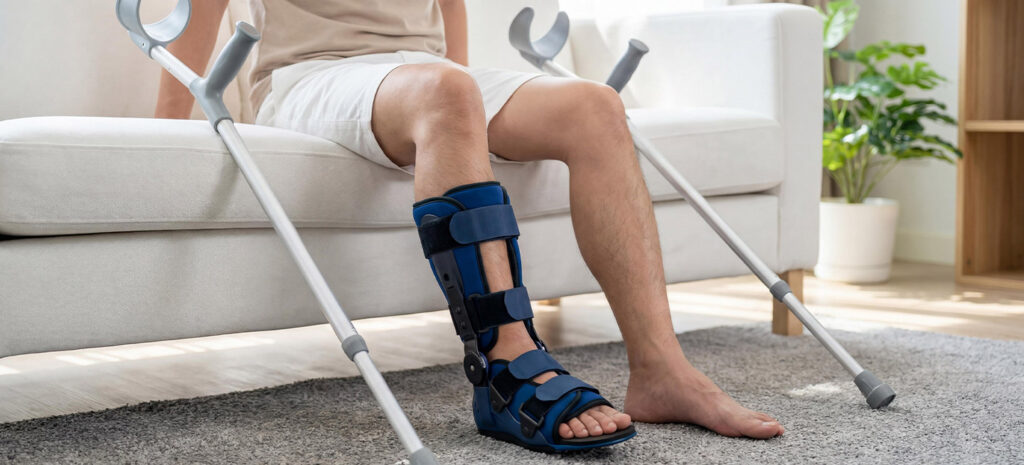
Clinical name: Overview of common foot and ankle surgical procedures and post-operative rehabilitation
Direct answer
Foot and ankle surgery covers a wide range of procedures — from ligament repair after recurrent sprains, to bunion correction, tendon repair, fracture fixation, and joint fusion or replacement for arthritis — and recovery looks quite different across them. What they have in common is that structured, physio-guided rehabilitation after surgery is a major factor in how well and how quickly function returns, alongside the surgery itself.
What this means
This article gives a plain-language overview of the foot and ankle surgeries physios see most often, and what rehab typically involves for each. It isn’t a substitute for advice from your surgeon about your specific procedure, but it should help you know what to expect and what questions to ask.
Ankle ligament reconstruction (e.g. Brostrom procedure)
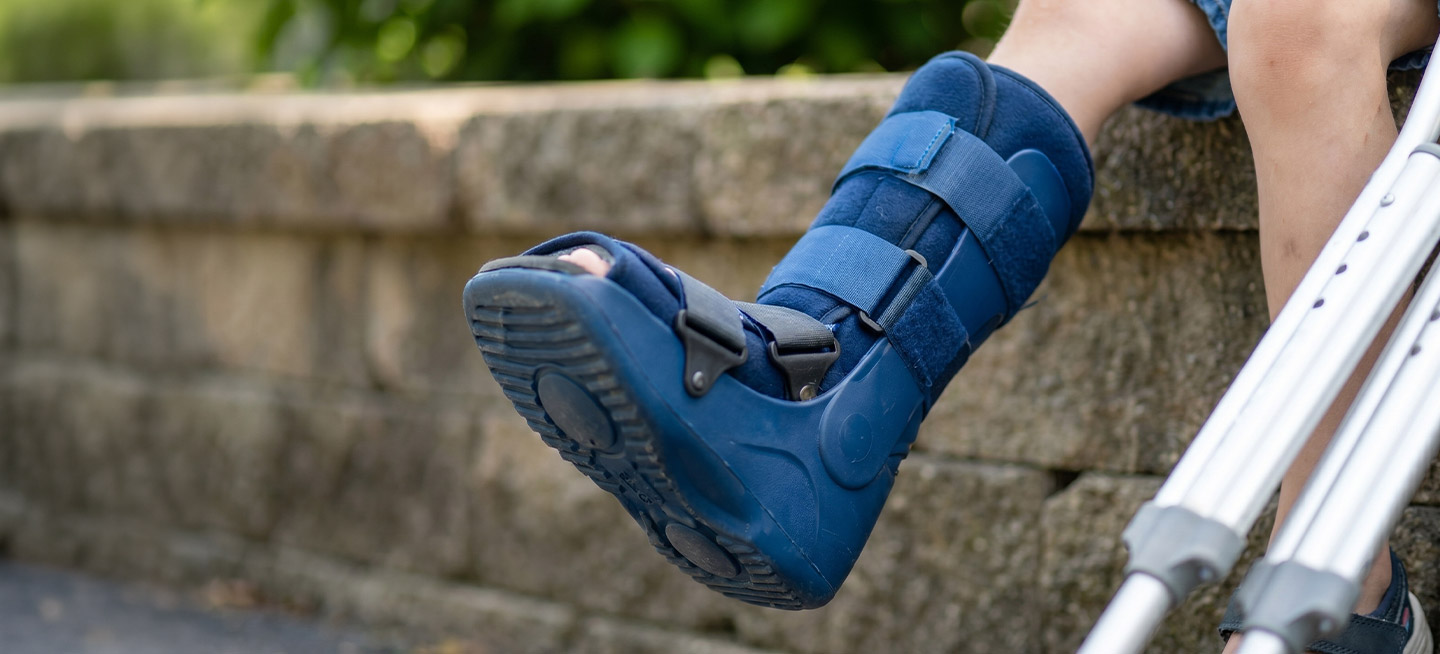
Used for chronic ankle instability that hasn’t settled with a genuine course of physiotherapy — the surgeon tightens or repairs the stretched outer ankle ligaments. Early recovery usually involves a period of immobilisation (boot, sometimes with limited weight-bearing) for a few weeks, followed by a graduated physio program rebuilding range of motion, strength and balance, similar in principle to non-surgical rehab but starting from a protected joint. Return to sport is typically staged over four to six months.
Ankle arthroscopy (keyhole ankle surgery)
A minimally invasive procedure used to address impingement, remove loose bone or cartilage fragments, or investigate persistent ankle pain that hasn’t responded to conservative treatment. Recovery after ankle arthroscopy varies considerably depending on the procedure performed. Weight-bearing and movement may begin early for some procedures, while others require a period of protection before rehabilitation progresses.
Bunion correction (hallux valgus surgery)
Realigns the big toe joint when bunion pain and deformity haven’t responded to footwear changes and conservative care. Recovery involves a period of protected, limited weight-bearing in a special shoe or boot (commonly two to six weeks depending on the specific procedure), followed by physio-guided work on toe range of motion, gait retraining and a gradual return to normal footwear and activity — full recovery is often three to six months.
Achilles tendon repair (after a rupture)
Repairs a fully torn Achilles tendon, usually from a sudden, forceful push-off movement. Modern rehab protocols favour earlier, protected movement rather than prolonged immobilisation, using a boot with progressively adjusted heel wedges. Physio plays a central role over several months, rebuilding calf strength and tendon capacity in stages before a return to running or sport, which is typically not cleared until around six months or more.
Fracture fixation (ORIF — open reduction and internal fixation)
Plates, screws or wires used to stabilise a broken ankle or foot bone so it heals in the correct position. Recovery depends heavily on the specific fracture and how it was fixed, but generally follows a period of protected weight-bearing, then a physio program addressing stiffness, swelling, strength and balance once the bone has adequate healing — often a longer process than the injury alone would suggest, because of the joint stiffness that builds during the protected phase.
Ankle fusion or ankle replacement (for advanced arthritis)
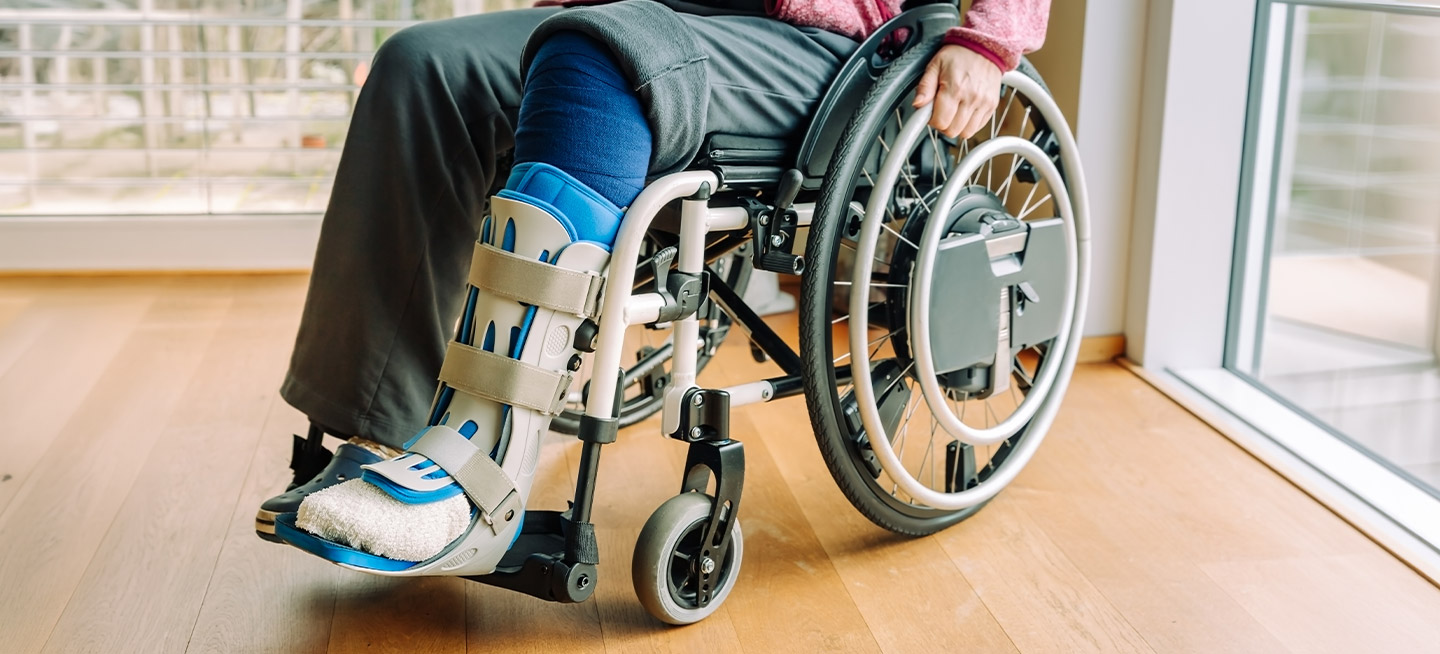
Considered when arthritis pain is significant and hasn’t responded to conservative management. Fusion joins the bones to eliminate painful joint movement, trading some mobility for pain relief; replacement preserves some joint movement but has different long-term considerations — your surgeon will guide which suits your situation. Both involve a significant period of rehabilitation, but the timing of weight-bearing and return to activity differs between ankle fusion and ankle replacement. Your surgeon will provide the specific postoperative restrictions, followed by physio-guided rebuilding of strength, gait and function.
What’s the physio’s role across all of these?
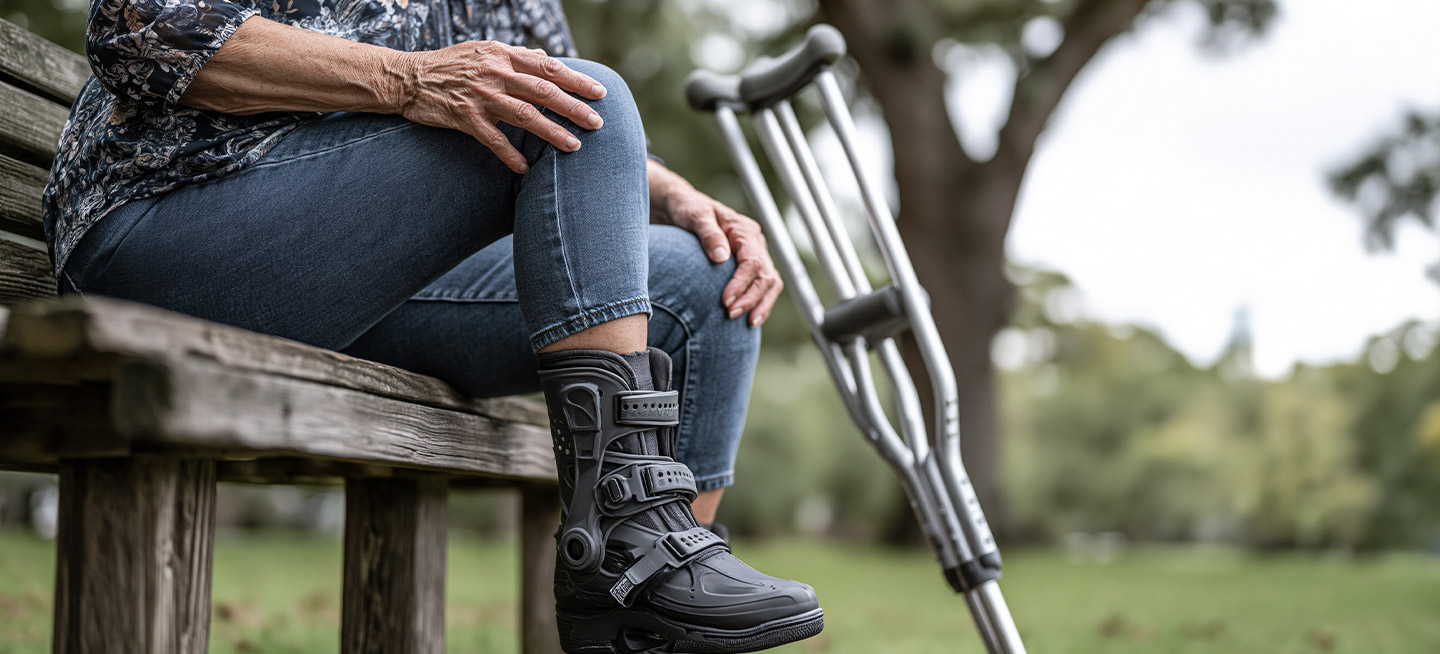
Across every procedure, physiotherapy is what translates a technically successful surgery into a foot or ankle that actually works well day to day — restoring the range of motion, strength, balance and movement confidence that surgery alone doesn’t fully deliver. Starting rehab at the right time (as guided by your surgeon) and following a structured, staged program is consistently linked to better outcomes than an unstructured or rushed return to activity.
Who’s behind this advice
Reviewed by: Core Healthcare Sorrento 2026
Related reading
• Foot or ankle stiffness as I get older — is it arthritis?
• My ankle keeps giving way months after a sprain — what’s going on?
• How can I stop rolling my ankle so often?
Next step
Waiting it out or simply resting rarely fixes the underlying cause, and the longer symptoms are left unaddressed, the more they tend to affect strength, movement and confidence — often making recovery slower than it needed to be. A timely assessment gives you a clear diagnosis and a specific plan, so you can start actively recovering rather than hoping it settles on its own.
Book an assessment with a physiotherapist at your nearest Core Healthcare clinic across Brisbane, Logan, the Gold Coast and Northern NSW, or ask your physio about this at your next session.