
Clinical name: ACL injury-prevention (neuromuscular training) programs
Direct answer
A large proportion of ACL injuries are preventable. Research consistently shows that structured neuromuscular training programs — combining strength, balance, and landing-technique work — reduce the risk of ACL injury by roughly 50 to 60%, according to a position statement from the National Athletic Trainers’ Association drawing on multiple clinical trials. The biggest gains come from training the specific movement patterns, particularly landing and change-of-direction mechanics, most linked to how ACL injuries happen.
What this means
“Neuromuscular training” refers to exercise that specifically retrains how your muscles, balance and nervous system control a joint during demanding movements — landing from a jump, cutting sharply, decelerating — rather than general strength or fitness work alone.
Why does this kind of training prevent ACL injuries?
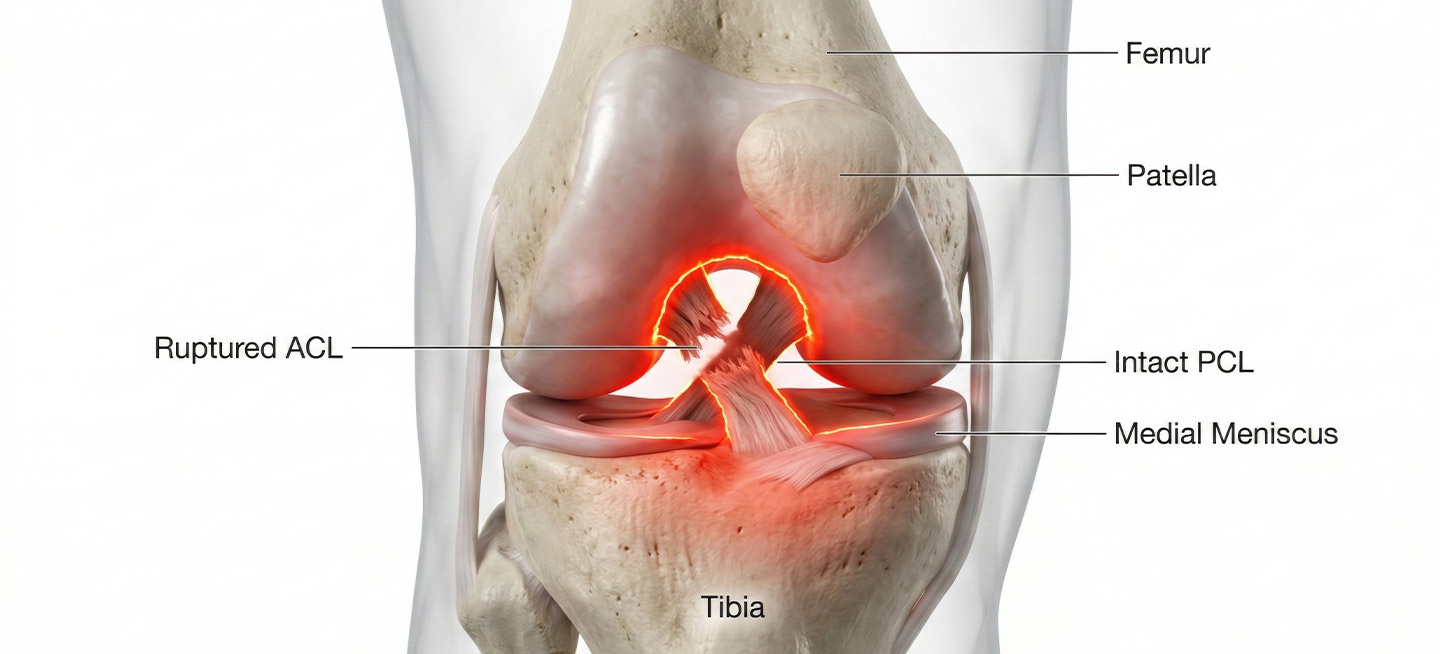
Most ACL injuries happen without any contact at all — during landing, pivoting or sudden deceleration, when the knee collapses inward under load (a pattern called dynamic knee valgus). Neuromuscular training specifically corrects this movement pattern and builds the strength and reaction speed to control the knee in these high-risk moments, which is why it’s more effective than generic strength or conditioning work alone.
What does the evidence show?
A position statement from the National Athletic Trainers’ Association, drawing on multiple randomised trials, found ACL injuries were reduced by 51 to 62% in athletes who completed a structured prevention program, with some analyses showing a 70% relative risk reduction. A separate meta-analysis focused on female team-sport athletes found neuromuscular training reduced ACL injury risk specifically by around 50%.
What does a program like this involve?
A typical program combines strength work (particularly for the hips and hamstrings), plyometric and landing-technique training, balance and agility drills, and flexibility work, usually performed two to three times a week as part of a normal warm-up — see our related article on evidence-based warm-ups.
Does age affect how well this works?
Yes — research suggests adolescence is a particularly responsive window: one meta-analysis found girls aged 18 or under who completed a neuromuscular training program had a 72% reduction in knee injury risk, compared with no significant reduction in athletes who started the same training after age 18. This doesn’t mean it’s not worth doing later, but it’s a strong argument for introducing this kind of training early in junior sport.

What tends to undermine a prevention program’s effectiveness?
Inconsistent attendance and stopping the program once athletes feel confident are the most common reasons prevention programs underperform in the real world — the evidence above reflects athletes who completed the training consistently, generally two to three times a week across a season, not an occasional session here and there.
What should I do if I’ve already had an ACL injury?
Neuromuscular training is just as relevant after an ACL reconstruction as before a first injury, since the risk of a second ACL injury — to either knee — is significantly elevated after the first. See our related article on ACL injury symptoms and treatment for what recovery and rehabilitation actually involves.
Who’s behind this advice
Reviewed by: Core Healthcare Bundall 2026
Clinic services: Sports Injuries & Performance, running biomechanics assessment, strength & conditioning
Sources: National Athletic Trainers’ Association, Prevention of Anterior Cruciate Ligament Injury (position statement); Meta-analysis, neuromuscular training for preventing knee injuries in female team athletes, Annals of Medicine, 2025
Related reading
• What are the symptoms of an ACL injury, and what’s the best treatment? (see our Knee articles)
• What’s the best warm-up and cooldown routine to prevent injury and improve performance?
• How female athletes can reduce their risk of ACL injury
• Why Am I Not Recovering Between Training Sessions? Signs You’re Under-Recovering (Not Undertraining)
Next step
Whether you’re chasing a personal best, coming back from a niggle, or just trying to stay in the game as you get older, waiting until something becomes a full injury rarely gives the best outcome. A tailored assessment identifies exactly what’s holding your performance back or putting you at risk, and gets you started on a plan built around your sport and your goals.
Book an assessment with a sports physiotherapist or exercise physiologist at your nearest Core Healthcare clinic across Brisbane, Logan, the Gold Coast and Tugun, or ask your physio about this at your next session.