
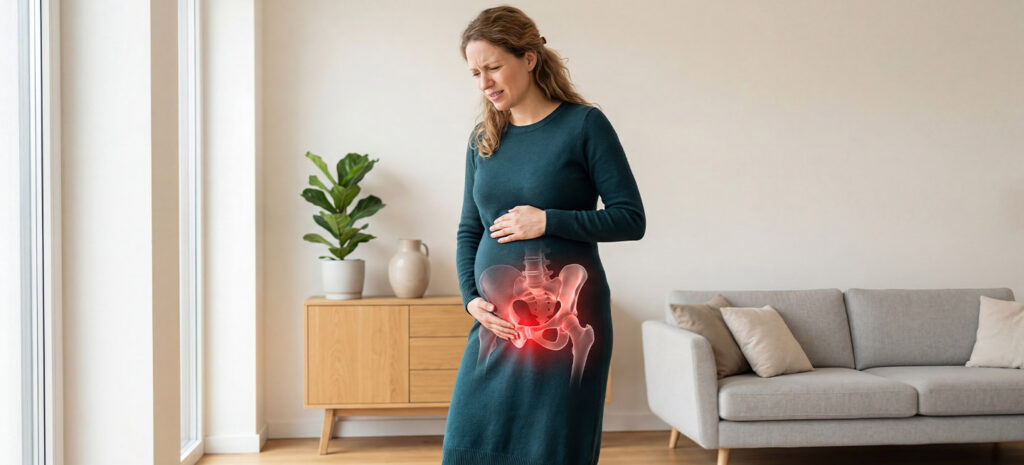
Clinical name: Pregnancy-related lumbopelvic pain (including SIJ and pelvic girdle pain)
Direct answer
Back and pelvic pain during pregnancy is extremely common, affecting a large proportion of pregnant women at some point, and comes from a combination of hormonal changes that loosen supporting ligaments, a shifting centre of gravity, and increasing load on the spine and pelvis. It’s very manageable with the right guidance, and doesn’t need to be something you simply endure until delivery.
What this means
During pregnancy, the hormone relaxin loosens the ligaments supporting the pelvis and spine to prepare the body for birth, while your changing shape shifts how load is distributed through your back and pelvis — together, these changes are the main drivers of pregnancy-related back and pelvic pain.
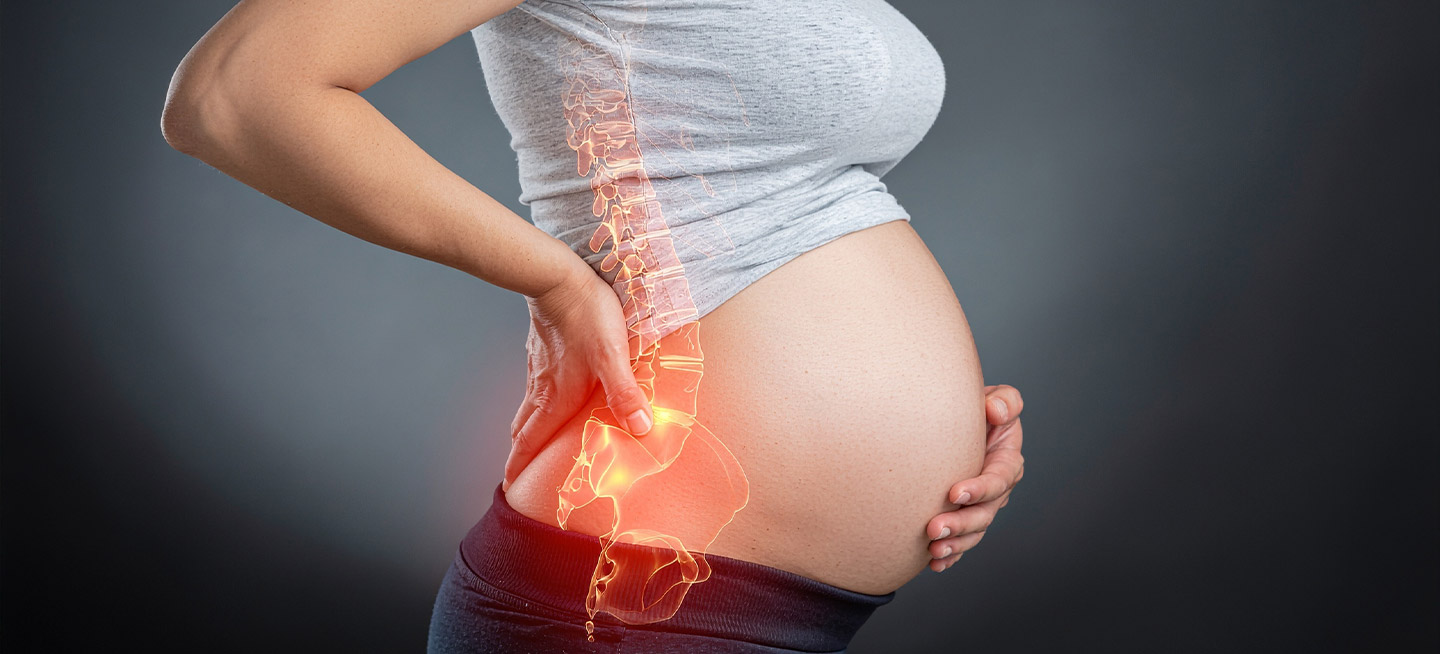
Why does this happen during pregnancy specifically?
Increased ligament laxity from relaxin reduces the passive stability normally provided by the pelvis’s ligaments, while the growing uterus shifts your centre of gravity forward, changing the load and posture your back and pelvis need to manage — together, these place extra demand on the muscles that now need to work harder to compensate.
What does pregnancy-related back or pelvic pain feel like?
It can present as central lower back pain, one-sided pain around the sacroiliac joint (see our related article), or pelvic girdle pain felt at the pubic bone or across the front of the pelvis, often worse with walking, climbing stairs, turning over in bed, or standing on one leg to dress.
What tends to aggravate it, and what helps ease it?
Standing on one leg (getting dressed, climbing stairs), prolonged standing or walking, and asymmetrical movements tend to aggravate symptoms. A supportive pregnancy or pelvic support belt, pacing daily activities, and specific pelvic floor and deep core exercises tailored to pregnancy tend to help manage it.
Is it safe to exercise with this kind of pain during pregnancy?
Yes — appropriately guided exercise is one of the most effective treatments, and avoiding movement altogether tends to make things worse rather than better. A women’s health physiotherapist can tailor a program that’s safe and effective at each stage of pregnancy.
Does this go away after birth?
For most women, symptoms improve significantly in the weeks to months after delivery as hormone levels and load through the pelvis normalise, though targeted postpartum rehabilitation — particularly for the pelvic floor and deep core — makes a meaningful difference to how completely and how quickly this happens.
Who’s behind this advice
Reviewed by: Core Healthcare Banyo 2026
Clinic services: Assessment and diagnosis of back pain and related symptoms (including leg, buttock and pelvic pain); manual therapy; individualised treatment and management planning based on your assessment findings; Pilates-based rehab classes, strengthening and exercise rehabilitation, including musculoskeletal and sports rehab; posture and workstation advice; women’s health physiotherapy for pregnancy-related back and pelvic pain.
Related reading
• One-sided lower back or hip pain — what could be causing it?
• Will core strengthening actually help my back pain?
• Lower back pain — when should I worry?
Next step
Back pain that’s left to “settle on its own” often takes longer to resolve and comes back more easily than back pain that gets an early, targeted assessment. A proper assessment identifies exactly what’s driving your symptoms and gets you started on a specific plan — not just advice to rest and see how it goes. Book a back assessment with a physiotherapist at any of Core Healthcare’s seven clinics across Brisbane, Logan, the Gold Coast and Northern NSW, or ask your physio about this at your next session.