
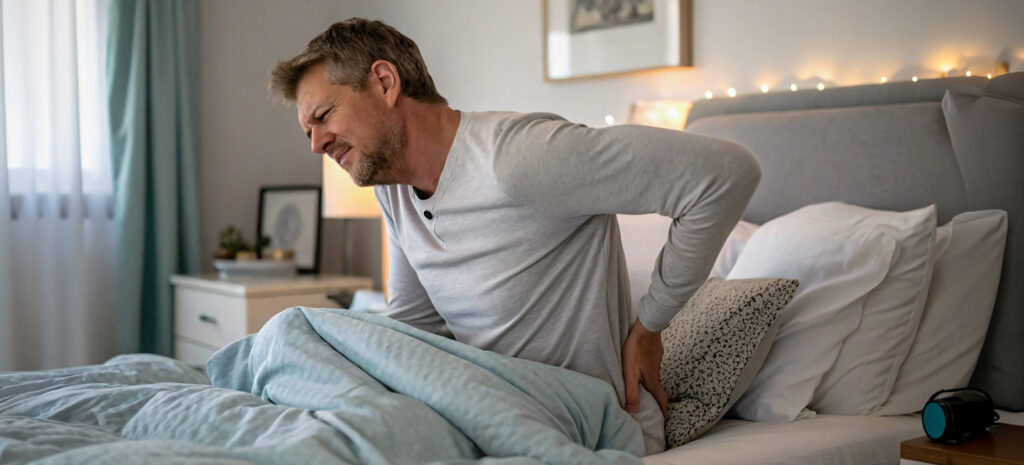
Lower back or hip pain on one or both sides — what could be causing it?
Clinical name: Sacroiliac (SI) joint pain
Direct answer
Pain in the lower back, often just below the beltline and on one or both sides, that’s aggravated by standing on one leg, rolling over in bed, or getting in and out of a car, commonly points to the sacroiliac (SI) joint — where the base of the spine meets the pelvis. SI joint pain can be unilateral (affecting one side) or bilateral (affecting both sides) — it doesn’t always stay on just one side. It generally responds well to a program focused on pelvic stability and control.
What this means
The sacroiliac joints connect your spine (the sacrum) to your pelvis on each side. They don’t move much, but they play an important role in transferring load between your upper body and legs, and irritation here typically feels like a deep, localised ache on one or both sides rather than central back pain.
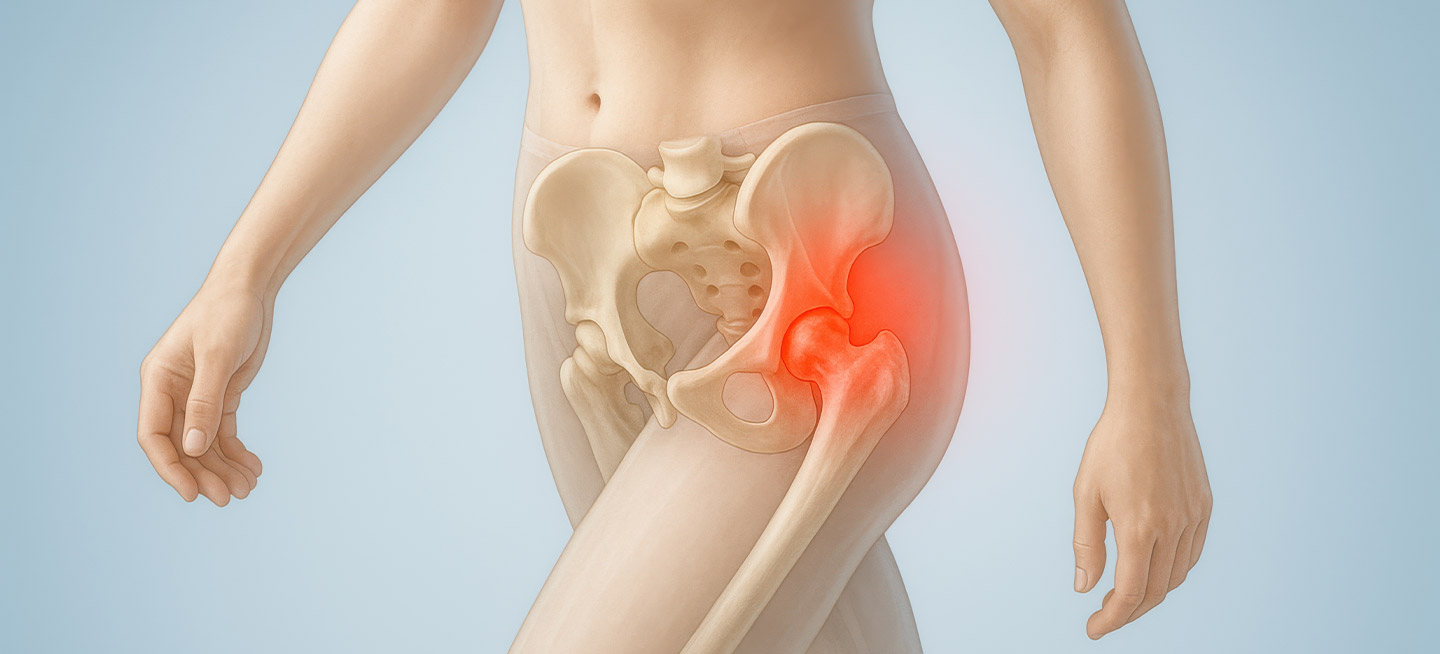
What causes SI joint pain?
A single awkward movement or fall, a sudden change in load (like a new exercise routine), pregnancy-related ligament changes (see our related article), or asymmetrical loading patterns over time can all irritate the SI joint. It’s also common after a change in walking pattern following a leg or hip injury.
How is it different from general lower back pain?
SI joint pain is typically localised just below and to the side of the lower back, rather than central. It can be unilateral (affecting one side) or bilateral (affecting both sides) — it does not always affect only one side, and the two sides can differ in how sore they are. It’s specifically provoked by single-leg loading tasks — standing on one leg to dress, climbing stairs, rolling in bed — which is a useful clue during assessment.
What tends to aggravate it, and what helps ease it?
Single-leg standing tasks, asymmetrical postures (like standing with weight through one hip), and high-impact activity tend to aggravate SI joint pain. A supportive pelvic belt during flare-ups, avoiding prolonged single-leg loading, and a targeted stability and control program tend to help it settle.

How is it treated?
Treatment focuses on improving control and strength around the pelvis — particularly the deep core, gluteal and pelvic floor muscles that support the joint — rather than treating the SI joint in isolation. Manual therapy can help settle acute symptoms alongside this strengthening work.
How long does it typically take to improve?
Many people notice meaningful improvement within four to eight weeks of a targeted program, though pregnancy-related SI pain and cases with longer-standing symptoms can take longer and benefit from ongoing management through to and beyond delivery.
Who’s behind this advice
Reviewed by: Juliet Burch, New Graduate Physiotherapist, Core Healthcare Banyo & Beenleigh
Clinic services: Core and Pilates-based rehab classes; assessment and diagnosis of back pain and related symptoms (including leg, buttock and pelvic pain); manual therapy; individualised treatment and management planning based on your assessment findings; strengthening and exercise rehabilitation, including musculoskeletal and sports rehab; posture and workstation advice; women’s health physiotherapy for pregnancy-related back and pelvic pain.
Related reading
• Back or pelvic pain during pregnancy — is this normal?
• Buttock pain — could it be coming from my back?
• Best exercises for back pain — do I really need to strengthen my core?
Next step
Back pain that’s left to “settle on its own” often takes longer to resolve and comes back more easily than back pain that gets an early, targeted assessment. A proper assessment identifies exactly what’s driving your symptoms and gets you started on a specific plan — not just advice to rest and see how it goes. Book a back assessment with a physiotherapist at any of Core Healthcare’s seven clinics across Brisbane, Logan, the Gold Coast and Northern NSW, or ask your physio about this at your next session.