

Clinical name: Degenerative disc disease (age-related disc changes)
Direct answer
“Disc degeneration” describes normal, age-related changes in the discs between your vertebrae — they lose some height and hydration over time, similar to how skin and other tissues change with age. It’s an extremely common finding, present in a large proportion of people with no back pain at all, and the term itself sounds far more alarming than what it usually represents.
What this means
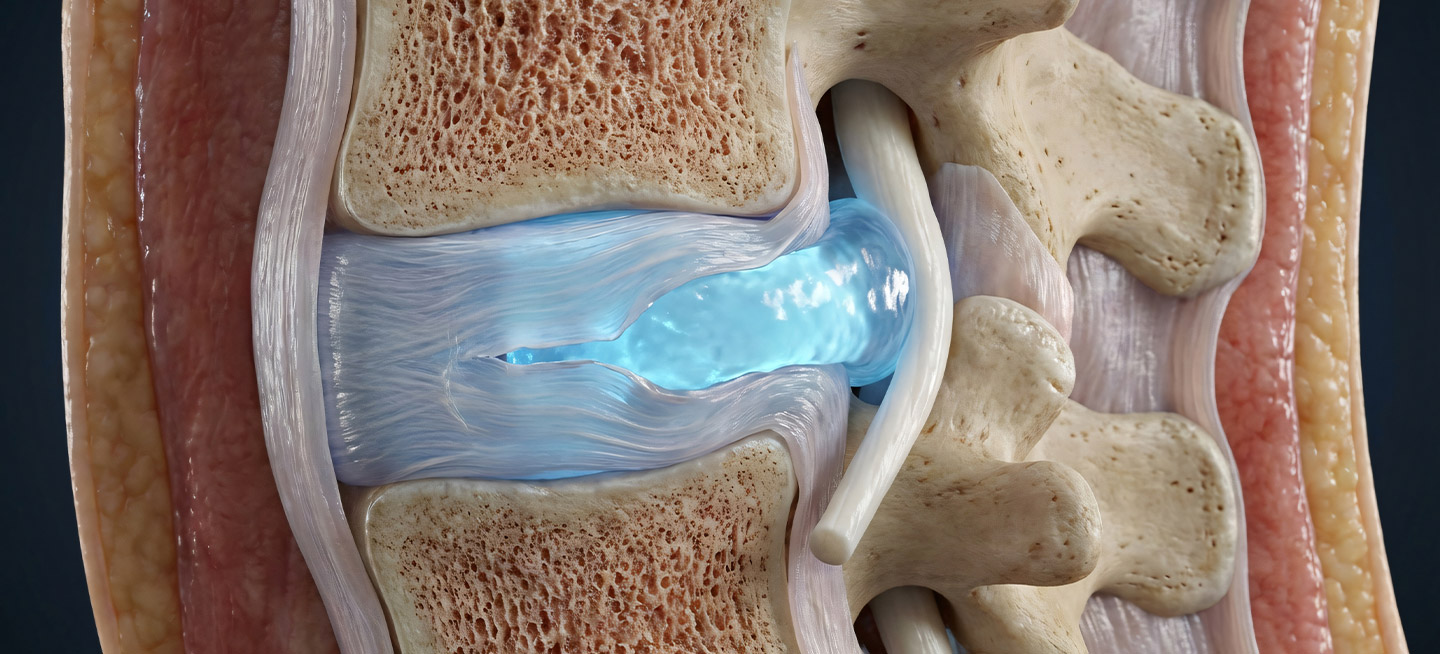
Discs act as cushions between each vertebra. As we age, they naturally lose some water content and height — a normal process, not a disease, despite the clinical name “degenerative disc disease” suggesting otherwise.
Why does this sound so much worse than it usually is?
The term “disease” implies pathology, but disc changes on imaging are present in a majority of pain-free people by their 40s and 50s, and the changes themselves correlate poorly with how much pain someone actually experiences. A scan finding disc degeneration doesn’t tell you how much it’s contributing to your symptoms, if at all.
What actually causes symptoms if the discs are just aging normally?
When degenerative discs do contribute to pain, it’s usually related to how the surrounding muscles, joints and movement patterns are coping with the change, rather than the disc height loss itself being painful. This is why treatment focuses on function and load tolerance rather than trying to reverse the disc changes.
What tends to aggravate it, and what helps ease it?
Prolonged static loading (sitting, standing) and sudden increases in activity can aggravate symptoms, similar to facet joint-related pain. Regular movement, core and trunk strengthening, and gradual conditioning help build the back’s tolerance for daily activity.

Will this get worse over time?
The disc changes themselves will generally continue gradually with age, as they do for everyone, but this doesn’t mean symptoms will necessarily worsen — many people with significant disc degeneration on imaging remain pain-free or well-managed for decades with good general conditioning.
How is it managed?
The same evidence-based approach as other spinal degenerative changes: staying active, targeted strengthening, and addressing specific aggravating movement patterns — rather than avoidance of activity out of concern for the disc changes themselves.
Who’s behind this advice
Reviewed by: Core Healthcare Banyo 2026
Clinic services: Assessment and diagnosis of back pain and related symptoms (including leg, buttock and pelvic pain); manual therapy; individualised treatment and management planning based on your assessment findings; Pilates-based rehab classes, strengthening and exercise rehabilitation, including musculoskeletal and sports rehab; posture and workstation advice; women’s health physiotherapy for pregnancy-related back and pelvic pain.
Related reading
• My back feels stiff and achy as I get older — what should I do?
• Disc bulge or herniated disc — what does that actually mean?
• Will core strengthening actually help my back pain?
Next step
Back pain that’s left to “settle on its own” often takes longer to resolve and comes back more easily than back pain that gets an early, targeted assessment. A proper assessment identifies exactly what’s driving your symptoms and gets you started on a specific plan — not just advice to rest and see how it goes. Book a back assessment with a physiotherapist at any of Core Healthcare’s seven clinics across Brisbane, Logan, the Gold Coast and Northern NSW, or ask your physio about this at your next session.