
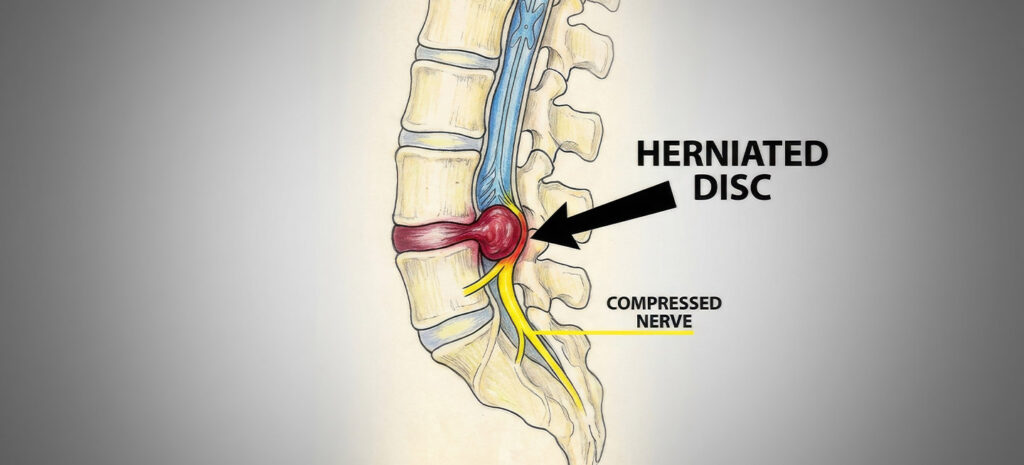
Clinical name: Lumbar disc bulge / protrusion / herniation
Direct answer
A disc bulge (or protrusion) happens when the jelly-like centre of a spinal disc pushes outward, usually from repeated or forceful bending, twisting or lifting, causing moderate to severe aching lower back pain that can sometimes spread into the leg. Most disc bulges settle well with the right early management and don’t require surgery.
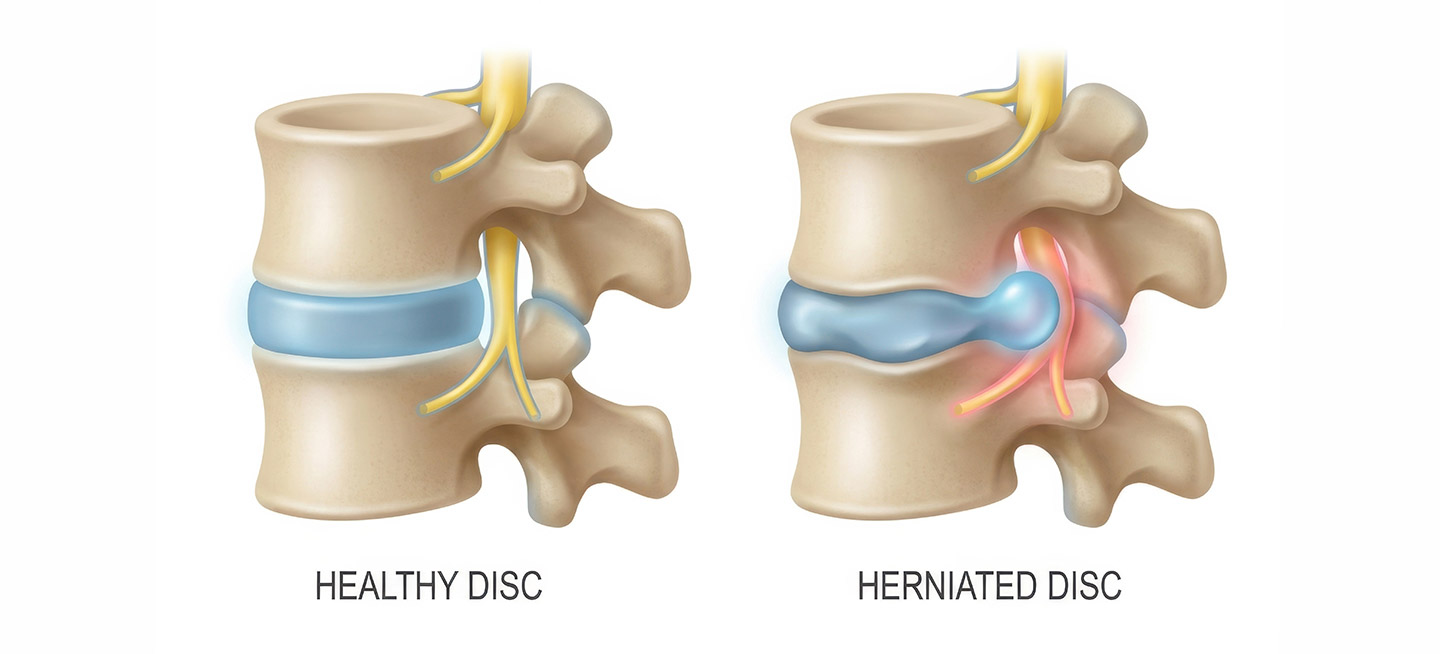
What this means
The discs between your vertebrae have a tough outer layer and a softer, jelly-like centre. A “bulge” or “protrusion” happens when that centre pushes against a weakened or thinned area of the outer layer, increasing pressure in and around the disc; a “herniation” describes a more significant version where that outer layer has actually torn.
What typically causes a disc bulge?
A disc bulge is most often the result of prolonged, forceful or repetitive movement rather than one single incident. The three most common contributors are:
• Prolonged forward bending
• Sitting for long periods with poor postural support
• Lifting and/or twisting, particularly when repeated or combined under load
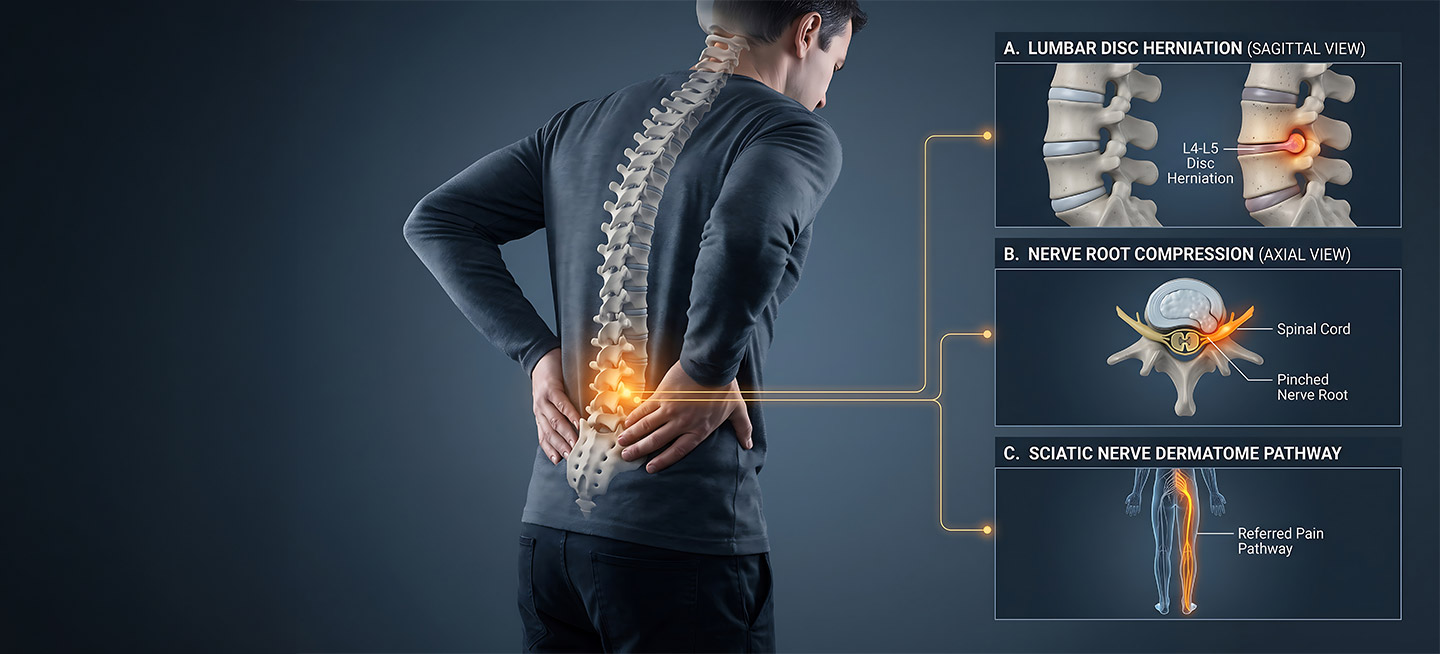
What does it actually feel like?
Moderate to severe, dull, central aching in the lower back is typical. When the bulge is significant enough to irritate a nearby nerve root, associated leg symptoms — pain, tingling or numbness travelling down the leg — can develop (see our related article on sciatica).
What tends to aggravate it, and what helps ease it?
Prolonged sitting, forward bending, and lifting tend to aggravate a disc bulge while it’s irritated. In the first 24 hours, reducing pressure through rest can help settle acute pain, but beyond that, early guided mobilisation and pacing activity — not prolonged rest — is what actually supports recovery and gets you back to normal activity levels.
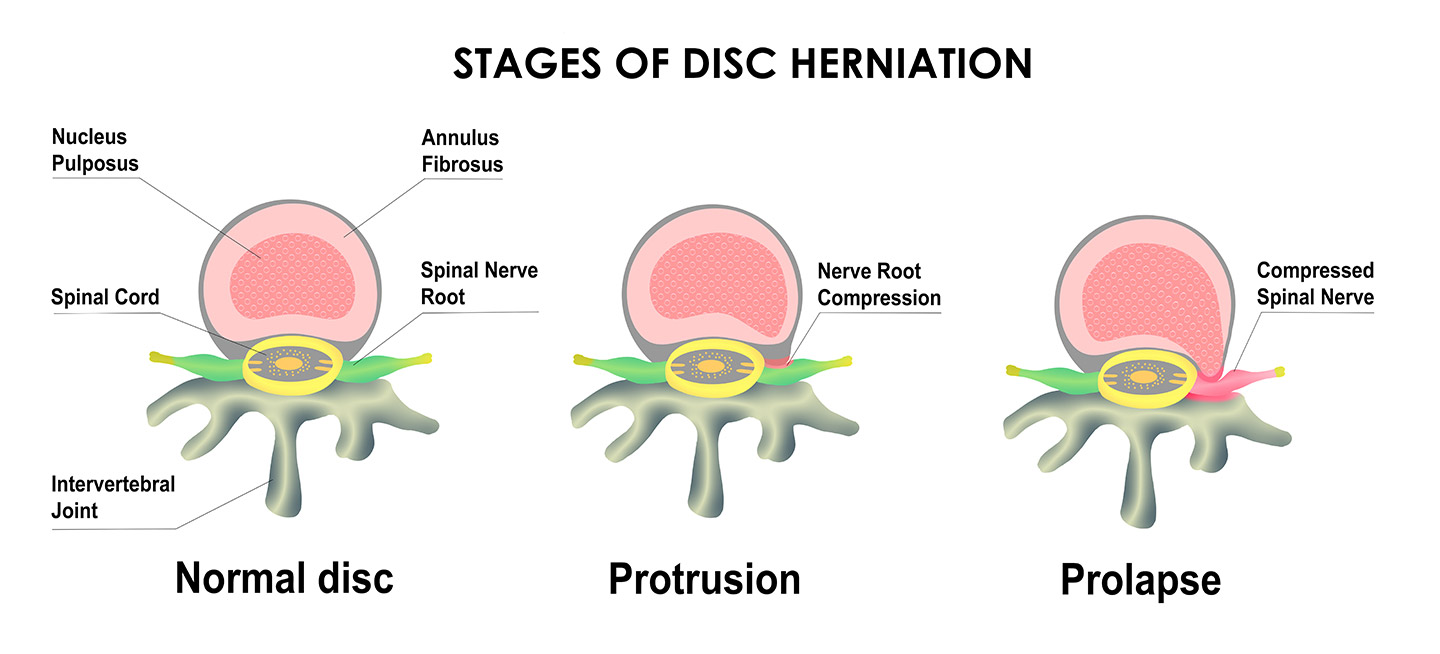
How is it treated?
After the initial settling period, treatment progresses through pain education and activity pacing, gentle range-of-motion work, and progressive core and functional strengthening — building the trunk’s capacity to support the spine and reduce ongoing pressure on the disc.
How long does recovery take?
Most people need around six to twelve weeks of structured rehabilitation, combining progressive core strengthening with ongoing education about managing load, to return to full function. More significant herniations, or those with persistent leg symptoms, can take longer and occasionally warrant further investigation.
Who’s behind this advice
Reviewed by: Core Healthcare Banyo 2026
Clinic services: Assessment and diagnosis of back pain and related symptoms (including leg, buttock and pelvic pain); manual therapy; individualised treatment and management planning based on your assessment findings; Pilates-based rehab classes, strengthening and exercise rehabilitation, including musculoskeletal and sports rehab; posture and workstation advice; women’s health physiotherapy for pregnancy-related back and pelvic pain.
Related reading
• Pain shooting down my leg from my back — is this sciatica?
• Do I need surgery for back pain or a disc bulge?
• Will core strengthening actually help my back pain?
Next step
Back pain that’s left to “settle on its own” often takes longer to resolve and comes back more easily than back pain that gets an early, targeted assessment. A proper assessment identifies exactly what’s driving your symptoms and gets you started on a specific plan — not just advice to rest and see how it goes. Book a back assessment with a physiotherapist at any of Core Healthcare’s seven clinics across Brisbane, Logan, the Gold Coast and Northern NSW, or ask your physio about this at your next session.