
Clinical name: Surgical vs. non-surgical management of back pain and disc pathology
Direct answer
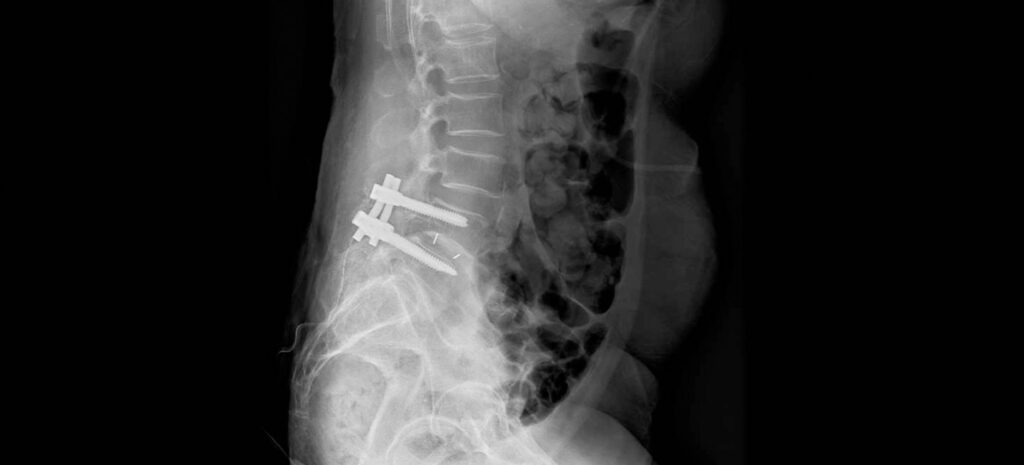
The great majority of back pain, including most disc bulges and sciatica, improves with non-surgical treatment and doesn’t require surgery at all. Surgery is generally reserved for a small subset of cases: specific red-flag presentations needing urgent attention, or persistent, significant symptoms that haven’t responded to a genuine, complete course of conservative treatment.
What this means
“Conservative management” refers to non-surgical treatment — physiotherapy, exercise, education and activity modification — and is the recommended first-line approach for the large majority of back conditions, including most disc bulges, before surgery is ever considered.

When does back pain need urgent surgical assessment?
Rarely, but importantly: new numbness in the saddle area, loss of bladder or bowel control, or progressive weakness in both legs (a condition called cauda equina syndrome) need same-day emergency assessment, as this is a genuine surgical emergency. Significant, progressive weakness in one leg also warrants prompt medical review rather than routine physiotherapy in the first instance.
Outside of an emergency, when is surgery actually considered?
Surgery for conditions like a disc bulge or spinal stenosis is generally considered when symptoms are significantly affecting daily life and haven’t responded to a genuine, complete trial of physiotherapy-led treatment — not simply because a scan shows a disc bulge or degenerative changes, which are common findings even in people who improve fully without surgery.
Does having a disc bulge on my scan mean I’ll eventually need surgery?
No — most disc bulges improve significantly with conservative treatment, and imaging findings alone don’t predict who will or won’t need surgery. Symptoms, function, and response to a proper course of treatment are what actually guide that decision, not the scan result in isolation.
Bulge, protrusion, herniation — how do the different types of disc problem compare?
“Disc problem” covers a range of findings, and the words used describe how far the disc material has moved, not how much pain you’ll have. From least to most displaced:
• Disc bulge — the disc extends beyond its normal edge over a broad area, but the tough outer layer is still intact.
• Protrusion — a more focused area of the disc pushes outwards, still contained by the outer layer.
• Extrusion (often called a herniation) — the outer layer has torn and some of the gel centre has pushed through.
• Sequestration — a piece of the disc material has broken away and sits separately from the disc. This is the least common of the four.
What matters more than the label is what the disc is doing to the structures around it. In practice, disc-related symptoms tend to fall into a few patterns:
• Mostly back pain — a central, dull ache that’s worse with sitting, bending and lifting, with little or no leg pain. The disc is irritated, but the nerve isn’t significantly involved.
• Leg pain with nerve irritation (radicular pain, or sciatica) — sharp, burning or shooting pain into the buttock or leg, sometimes with tingling, which can be as bad as or worse than any back pain (see our related article on sciatica).
• Nerve dysfunction (radiculopathy) — numbness, weakness or changes in reflexes in the leg or foot, which means the nerve is being affected more than just irritated. These findings are closely monitored, and weakness that’s getting worse needs prompt assessment.
• Emergency pattern — numbness around the groin or saddle area, new bladder or bowel problems, or symptoms in both legs (see the first section of this article).
A larger or more displaced disc isn’t automatically more painful, and it isn’t automatically headed for surgery. Disc material that has pushed outwards often shrinks on its own over weeks to months as the body gradually reabsorbs it, which is a big part of why so many people improve without an operation.
Is it a disc, or something else? How the common back conditions compare
Different back conditions can feel similar, but the patterns are often different. These are general guides rather than rules, and many people have more than one thing going on, which is exactly what a physiotherapy assessment is designed to sort out.
• Disc bulge or herniation — usually worse with sitting, bending forward, lifting, coughing and sneezing, and often eased by walking or changing position. May include leg symptoms.
• Sciatica — pain, tingling or numbness travelling below the buttock and often below the knee. It’s a symptom of nerve irritation, with a disc bulge being the most common cause.
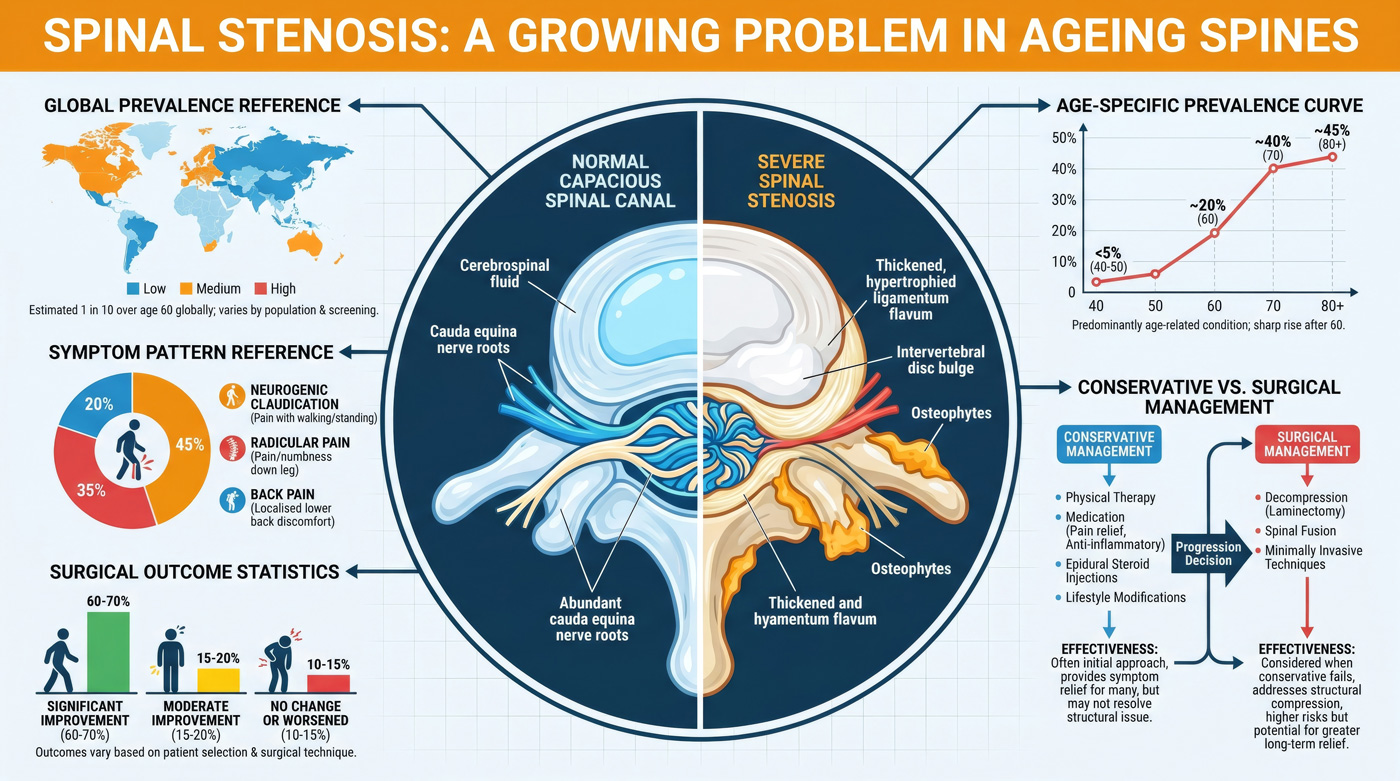
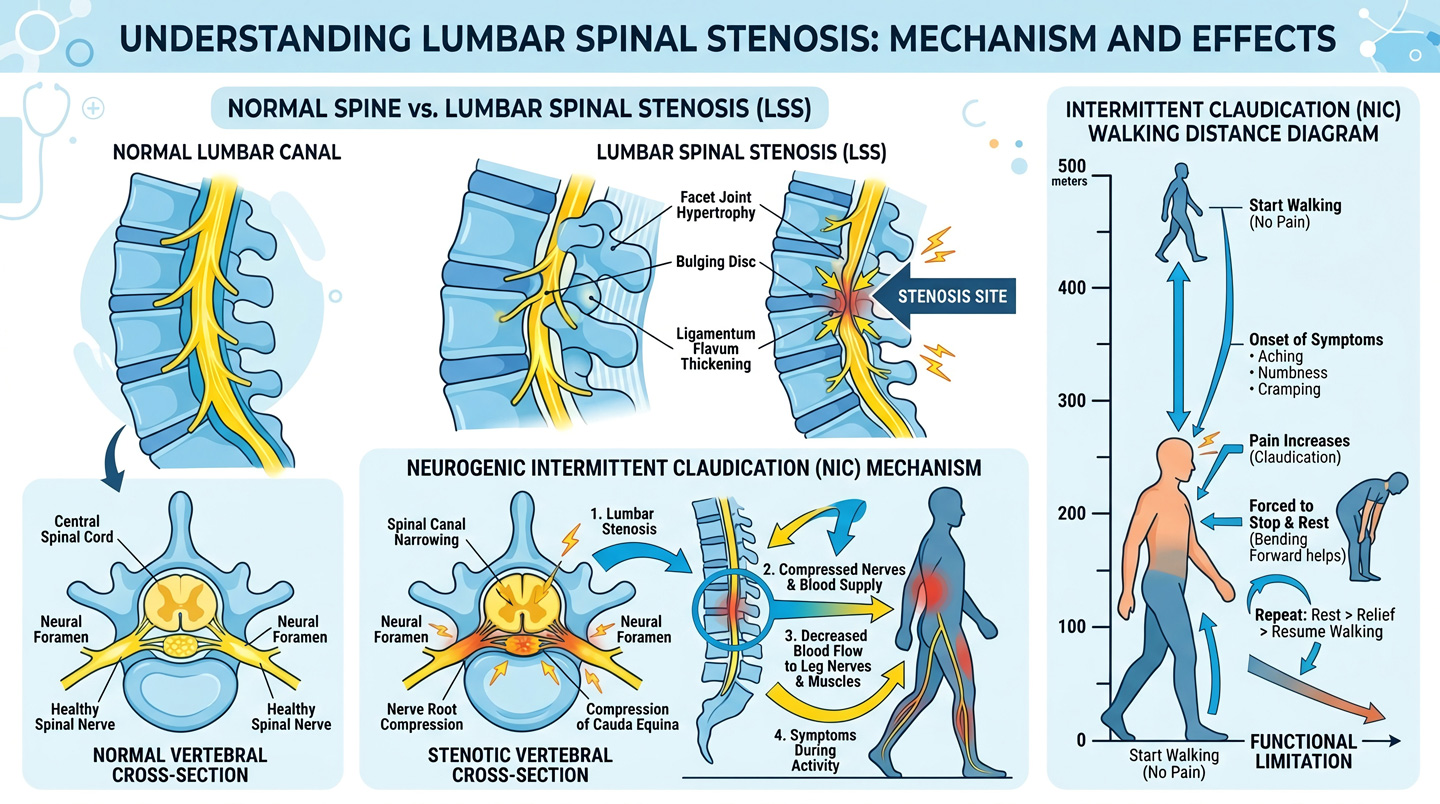
• Spinal stenosis — typically the opposite pattern to a disc: leg heaviness, aching or numbness that comes on with standing and walking and eases quickly with sitting or leaning forward. Most common over 50 (see our related article).
• Facet joint pain or spondylosis — a localised, stiff ache in the lower back, often worse first thing in the morning or with leaning backwards and prolonged standing. It rarely travels below the knee (see our related article on stiffness with age).
• Degenerative disc disease — age-related change in the discs, very common and often painless. When it does cause pain, it’s usually a background ache that flares with prolonged sitting or heavy loading (see our related article).
• Spondylolisthesis or spondylolysis — a vertebra slipping forward (or a stress crack in the bone that allows it to). It tends to cause a lower back ache that’s worse with arching backwards and is seen in young athletes as well as older adults.
• Muscle or ligament strain — sudden, localised pain after a specific movement or lift, with muscle spasm, but no leg symptoms below the knee. It usually improves noticeably within days to a couple of weeks (see our related article).
• Sacroiliac (SI) joint pain — pain just below the beltline on one or both sides, worse with single-leg tasks like climbing stairs or rolling in bed (see our related article).
• Inflammatory back pain — stiffness lasting more than 30 minutes in the morning that improves with movement and gets worse with rest, usually starting in younger adults (see our related article).
What do the words on my scan report actually mean?
Scan reports are written for other health professionals, and the language can sound alarming. Many of the findings below are very common in adults with no back pain at all, and become more common with age, so they need to be interpreted alongside your symptoms and how you move, not on their own.
• Disc desiccation or dehydration — the disc has lost some of its water content, a normal age-related change.
• Disc height loss — the disc has become a little thinner over time, again usually age-related.
• Annular tear or fissure — a small tear in the disc’s outer layer. It’s often found in people with no pain, and often heals or settles.
• Facet arthropathy or hypertrophy — age-related change (arthritis) in the small joints at the back of the spine.
• Canal or foraminal narrowing (mild, moderate or severe) — the space for the nerves in the spinal canal, or in the small openings where nerve roots leave the spine, is reduced. Mild narrowing is very common and often causes no symptoms.
• Nerve root contact versus compression — “contact” means a disc is touching a nerve root, which is common and often symptom-free. “Compression” or “displacement” suggests the nerve is being pressed more significantly, and is more likely to match nerve symptoms.
What does a genuine trial of conservative treatment actually involve?
A structured, adequately dosed program of physiotherapy-guided exercise and activity modification, given enough time to work — typically at least six to twelve weeks for most back conditions — rather than a brief attempt at rest or a single treatment session before assuming it hasn’t worked.
If surgery is needed, what’s the pathway?
Your physiotherapist can identify when symptoms and response to treatment suggest a surgical opinion is warranted, and arrange the appropriate referral to an orthopaedic or spinal team for further assessment, working closely alongside treating surgeons to coordinate your ongoing care before and after any procedure.
Back pain and surgery terms you might hear — what do they mean?
Terms about the spine and nerves
• Lumbar spine — the lower back, made up of five vertebrae, where most disc problems occur.
• Nerve root — the part of a spinal nerve as it leaves the spine, before it travels into the leg.
• Radicular pain — pain travelling along a nerve pathway because a nerve root is irritated. Sciatica is the best-known example.
• Radiculopathy — when a nerve root isn’t working normally, causing numbness, weakness or reflex changes as well as pain.
• Stenosis — narrowing of the space around the spinal cord or nerves.
• Spondylosis — the general term for age-related wear in the joints and discs of the spine.
• Spondylolisthesis — one vertebra slipping forward over the one below it.
• Cauda equina syndrome — a rare emergency where the nerves at the base of the spine are compressed, causing saddle numbness, bladder or bowel changes or weakness in both legs. It needs same-day emergency care.
Terms about treatment and surgery
• Conservative management — non-surgical treatment, such as physiotherapy, exercise, education and activity modification.
• Epidural steroid injection or nerve root block — an injection of anti-inflammatory medication near an irritated nerve root. It can give temporary relief of nerve pain, but it doesn’t change the disc itself.
• Microdiscectomy — keyhole-style surgery to remove the part of a disc that is pressing on a nerve.
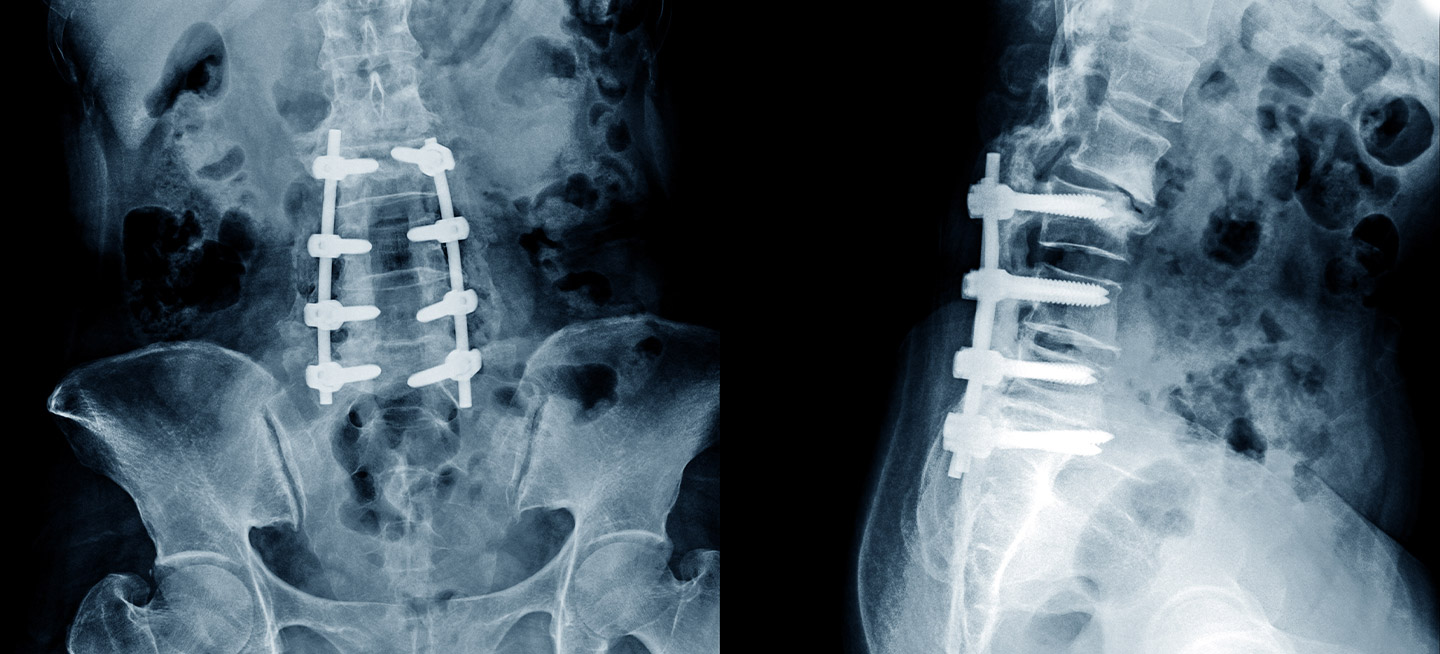
• Laminectomy or decompression — surgery to remove a small amount of bone (and sometimes ligament) to create more room for the nerves, most often used for stenosis.
• Spinal fusion — surgery that joins two or more vertebrae together so they no longer move independently. It’s used in selected cases, such as significant instability.
• Disc replacement — surgery that replaces a damaged disc with an artificial one. It’s less commonly used than the procedures above.
If you’ve been given a diagnosis or a scan report and aren’t sure what it means for you, your physio can walk you through it in plain language and explain what it means for your symptoms and your options.
Who’s behind this advice
Reviewed by: Core Healthcare Banyo 2026
Clinic services: Assessment and diagnosis of back pain and related symptoms (including leg, buttock and pelvic pain); manual therapy; individualised treatment and management planning based on your assessment findings; Pilates-based rehab classes, strengthening and exercise rehabilitation, including musculoskeletal and sports rehab; posture and workstation advice; women’s health physiotherapy for pregnancy-related back and pelvic pain.
Related reading
• Disc bulge or herniated disc — what does that actually mean?
• Legs feel heavy or numb when walking — what does that mean?
• Lower back pain — when should I worry?
Next step
Back pain that’s left to “settle on its own” often takes longer to resolve and comes back more easily than back pain that gets an early, targeted assessment. A proper assessment identifies exactly what’s driving your symptoms and gets you started on a specific plan — not just advice to rest and see how it goes. Book a back assessment with a physiotherapist at any of Core Healthcare’s seven clinics across Brisbane, Logan, the Gold Coast and Northern NSW, or ask your physio about this at your next session.