
Direct answer
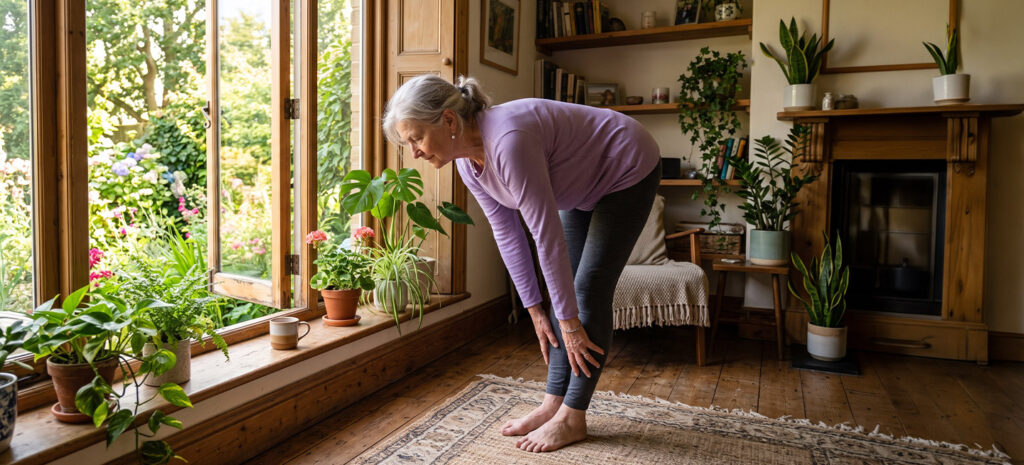
Legs that feel heavy, tired, weak or numb after walking a certain distance — but ease quickly with sitting or leaning forward — is a classic pattern of lumbar spinal stenosis, a narrowing of the space around the spinal nerves that becomes more symptomatic in certain postures. It’s most common in older adults and, while it sounds alarming, is very manageable with the right approach for most people.
What this means
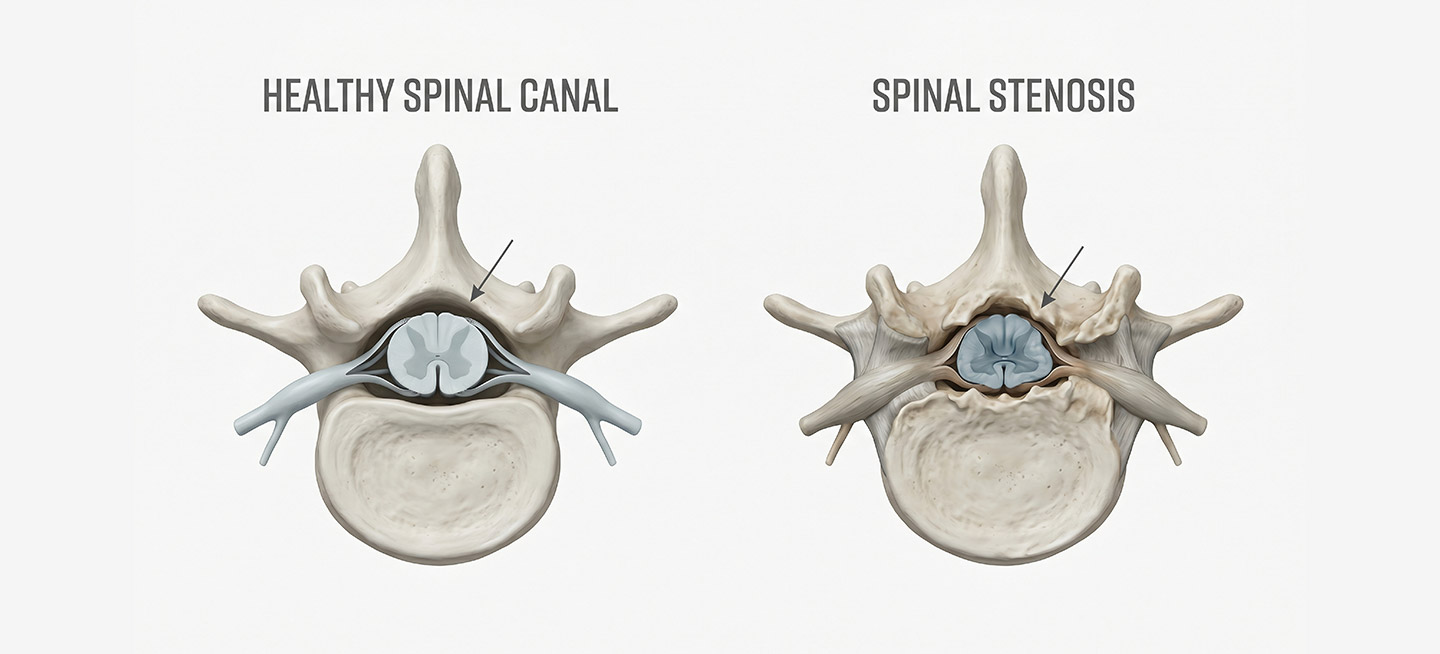
“Stenosis” means narrowing. In the lower back, this refers to the space the spinal nerves travel through becoming tighter — often from a combination of age-related disc, joint and ligament changes — which can put pressure on the nerves, particularly in upright, extended postures like standing and walking.
Why does walking bring symptoms on?
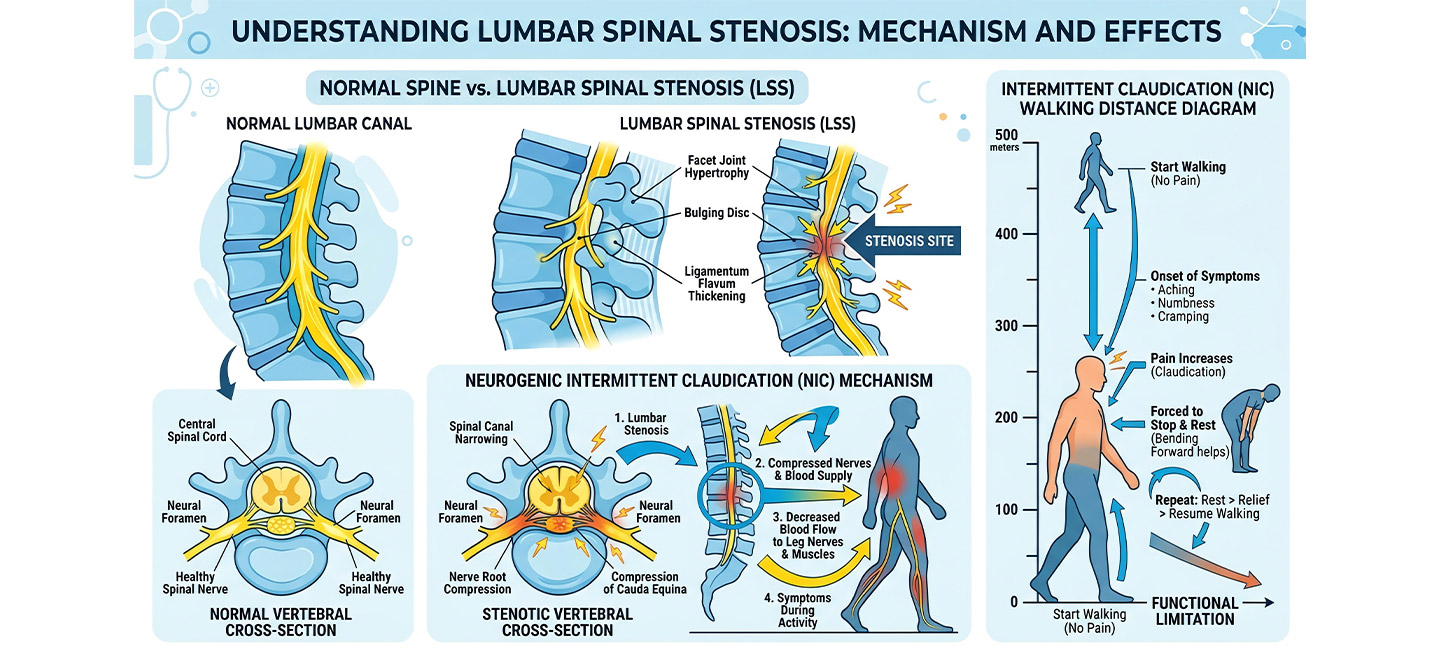
Standing upright and walking naturally narrow the space in the lower spine slightly (a position called extension), which can be enough to compress already-tight nerve pathways in someone with stenosis. Sitting or leaning forward (flexion) opens that space back up, which is exactly why symptoms characteristically ease so quickly in those positions.
What are the typical symptoms?
Heaviness, aching, weakness, tingling or numbness in one or both legs that comes on with walking or standing and improves within minutes of sitting or bending forward — sometimes described as needing to “shop with a trolley” to lean on, since the forward-leaning posture allows people to walk further comfortably.
What tends to aggravate it, and what helps ease it?
Prolonged standing, walking upright, and extension-based activities (like reaching overhead) tend to bring symptoms on. Positions and activities involving forward flexion — sitting, leaning on a trolley or bench, cycling on an upright bike — tend to ease symptoms, and forward-flexion-based exercise is often a core part of treatment.
How is it treated?
A physiotherapy program focused on flexion-biased exercises, core and hip strengthening, and general conditioning (often including stationary cycling, which is well tolerated) helps most people manage symptoms effectively and maintain walking capacity without surgery.
Will I need surgery?
Most people manage well with a structured non-surgical program. Surgery is generally reserved for cases where symptoms significantly limit daily life despite a genuine trial of physiotherapy — see our related article on surgical decision-making for back pain.
Who’s behind this advice
Reviewed by: Core Healthcare Banyo 2026
Clinic services: Assessment and diagnosis of back pain and related symptoms (including leg, buttock and pelvic pain); manual therapy; individualised treatment and management planning based on your assessment findings; Pilates-based rehab classes, strengthening and exercise rehabilitation, including musculoskeletal and sports rehab; posture and workstation advice; women’s health physiotherapy for pregnancy-related back and pelvic pain.
Related reading
• Disc degeneration — should I be worried?
• Do I need surgery for back pain or a disc bulge?
• My back feels stiff and achy as I get older — what should I do?
Next step
Back pain that’s left to “settle on its own” often takes longer to resolve and comes back more easily than back pain that gets an early, targeted assessment. A proper assessment identifies exactly what’s driving your symptoms and gets you started on a specific plan — not just advice to rest and see how it goes. Book a back assessment with a physiotherapist at any of Core Healthcare’s seven clinics across Brisbane, Logan, the Gold Coast and Northern NSW, or ask your physio about this at your next session.