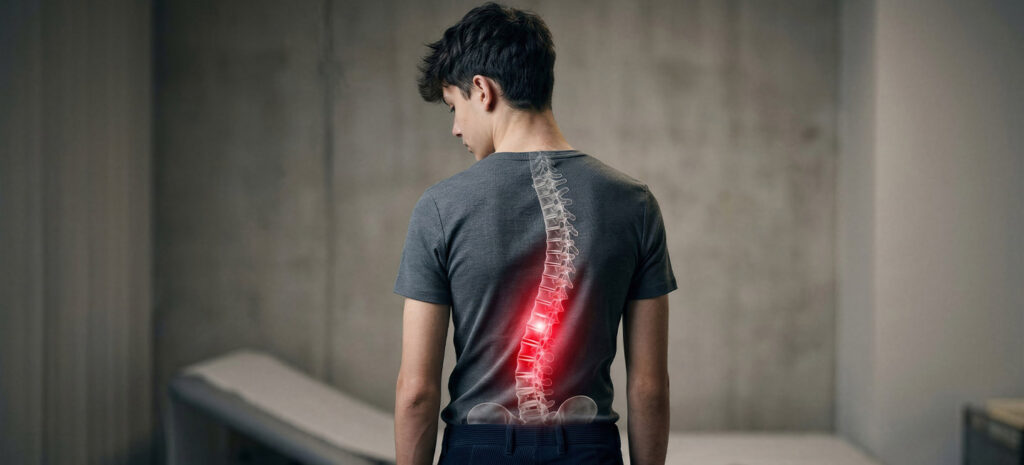
Clinical name: Scoliosis
Direct answer
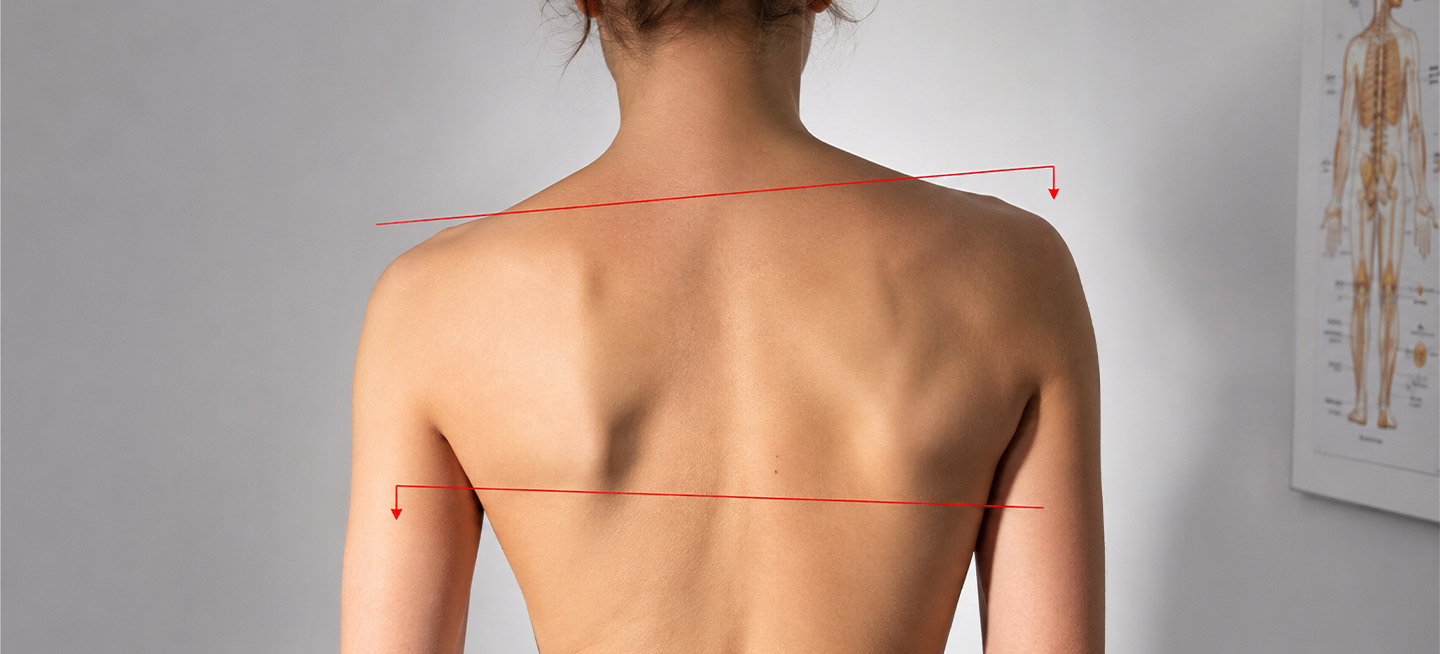
A sideways curve in the spine — often first noticed as uneven shoulders, one shoulder blade sticking out more than the other, or an uneven waistline — is called scoliosis, and most cases in children and teens are mild and simply need monitoring rather than active treatment. The key factors that guide what’s needed are the size of the curve and how much growth remains.
What this means
Scoliosis is a sideways curvature of the spine, often with some rotation of the vertebrae as well. Most cases found in adolescence have no single identifiable cause (called “idiopathic” scoliosis) and are unrelated to posture, backpacks, or sporting activity, despite common assumptions.
What are the signs to look out for?
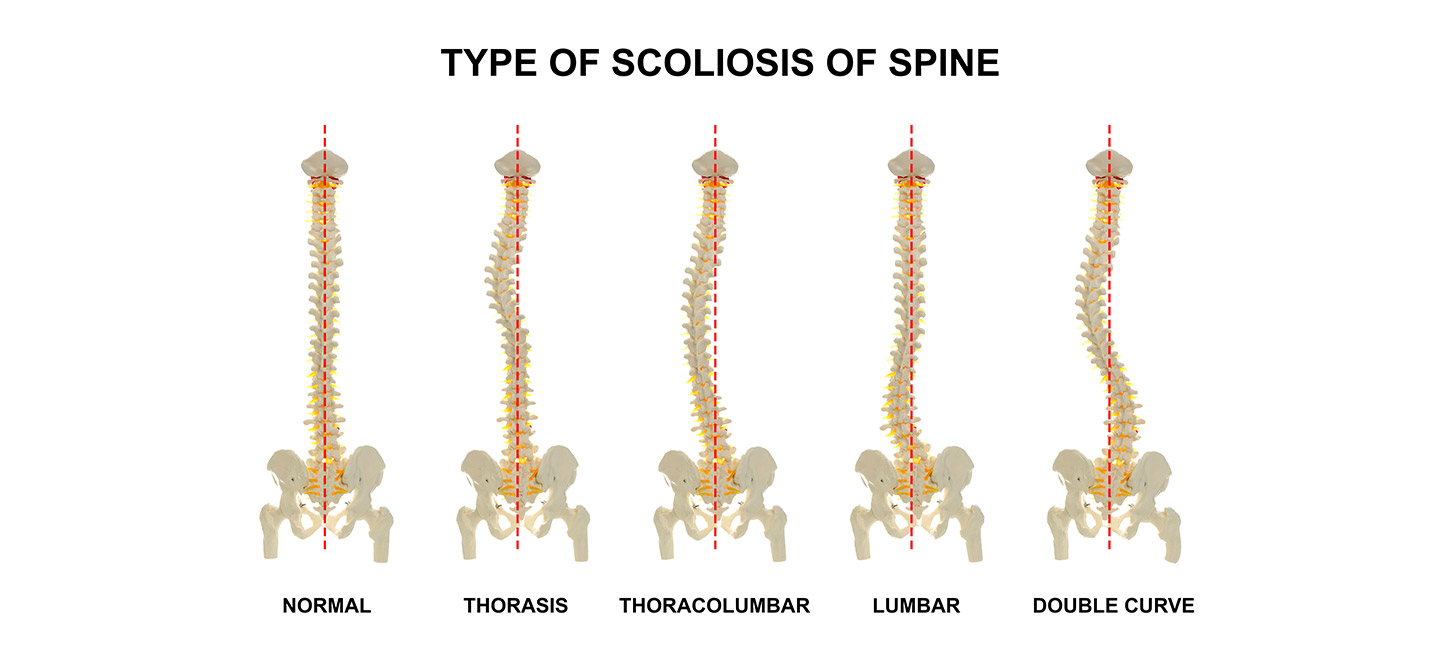
Uneven shoulder height, one shoulder blade more prominent than the other, an uneven waistline, or the body leaning slightly to one side are the most common visual signs. A simple forward-bend test, where a curve or rib prominence becomes more visible, is often how it’s first picked up, sometimes at a routine school screening.
Does scoliosis need treatment?
It depends mainly on the size of the curve and how much growth the child has left — smaller curves in a child nearing the end of their growth often just need periodic monitoring, since they’re unlikely to progress much further. Larger curves, or those found earlier in a growth spurt, are more likely to need active management, such as bracing, to limit further progression.
What role does exercise and physiotherapy play?
A scoliosis-specific exercise approach can help improve posture, muscular symmetry and, in some cases, contribute to managing curve progression alongside monitoring or bracing, as well as supporting comfort and function day to day — even when a curve doesn’t require bracing or surgery.
Is it safe for my child to keep playing sport?
Yes — in the vast majority of cases, scoliosis doesn’t need to limit sport or physical activity, and staying active is generally encouraged rather than restricted.
What happens at an assessment?
Assessment includes observing posture and spinal alignment, the forward-bend test, and measuring any asymmetry, with referral for an X-ray if a curve needs to be measured more precisely or monitored over time.
Who’s behind this advice
Reviewed by: Core Healthcare Banyo 2026
Clinic services: Assessment and diagnosis of back pain and related symptoms (including leg, buttock and pelvic pain); manual therapy; individualised treatment and management planning based on your assessment findings; Pilates-based rehab classes, strengthening and exercise rehabilitation, including musculoskeletal and sports rehab; posture and workstation advice; women’s health physiotherapy for pregnancy-related back and pelvic pain.
Related reading
• How can young athletes reduce their risk of injury while playing school sport?
• Upper back or shoulder blade pain — what’s causing it?
• Will core strengthening actually help my back pain?
Next step
Back pain that’s left to “settle on its own” often takes longer to resolve and comes back more easily than back pain that gets an early, targeted assessment. A proper assessment identifies exactly what’s driving your symptoms and gets you started on a specific plan — not just advice to rest and see how it goes. Book a back assessment with a physiotherapist at any of Core Healthcare’s seven clinics across Brisbane, Logan, the Gold Coast and Northern NSW, or ask your physio about this at your next session.