

Clinical name: Sciatica (sciatic nerve irritation)
Direct answer
Pain, numbness or tingling that travels from your lower back through the buttock and down the leg — sometimes as far as the foot — is the hallmark of sciatica, caused by irritation or compression of the sciatic nerve, the largest nerve in the body. The good news is that with early, guided treatment, most people see significant improvement within six to twelve weeks.
What this means
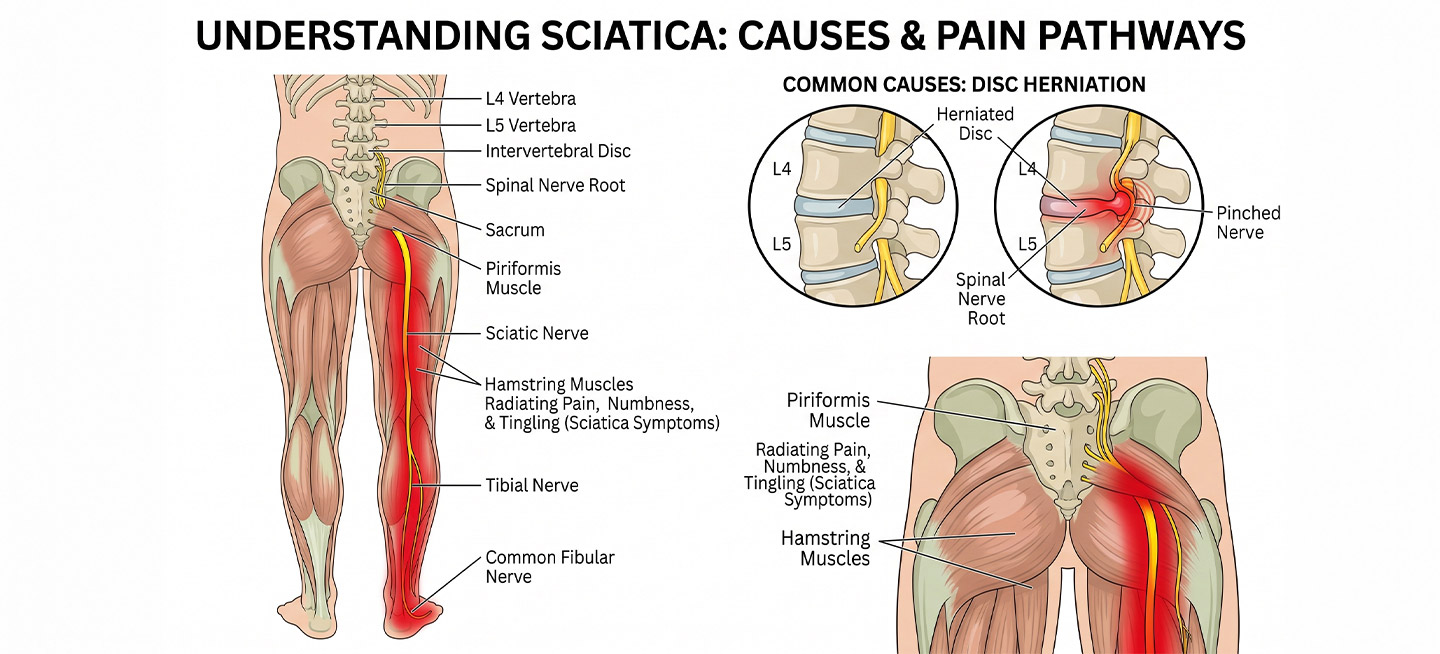
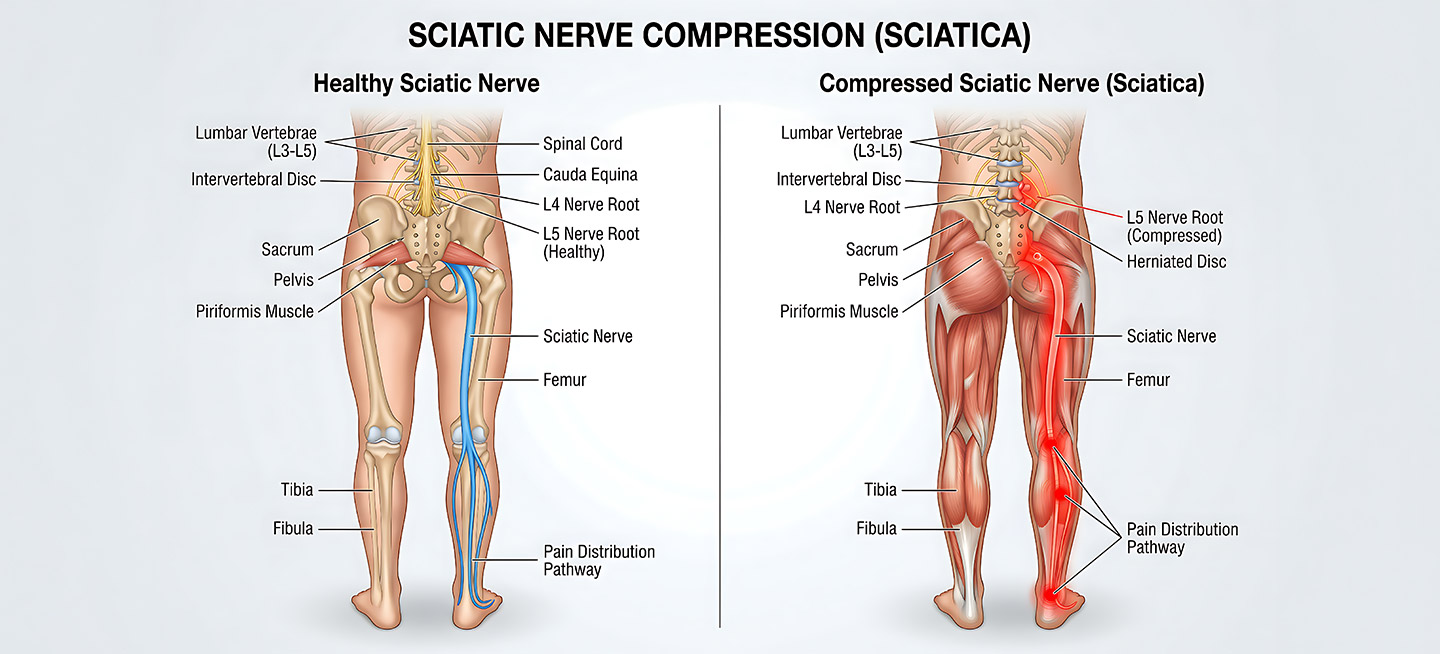
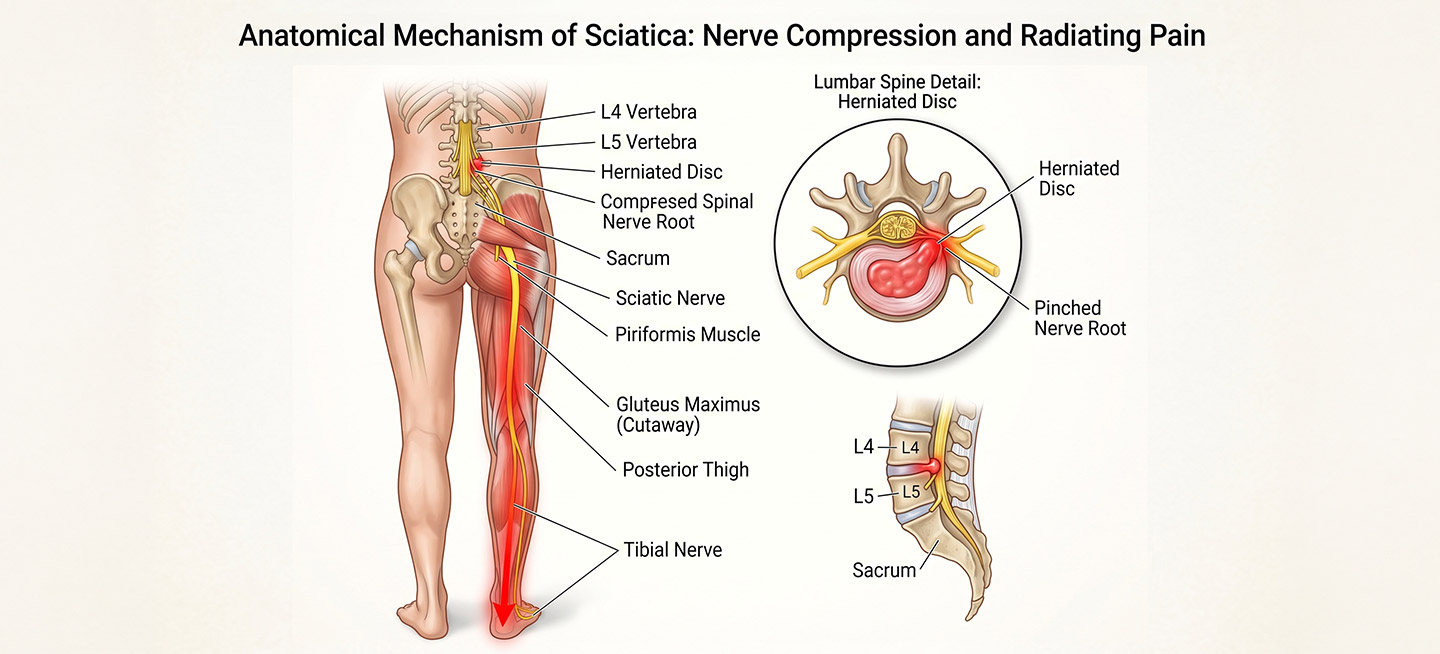
The sciatic nerve runs from your lower back, through your buttock, and down the back of each leg to your feet. When something in the lower back irritates or compresses it, the pain, numbness or tingling is felt anywhere along that nerve’s path — not necessarily where the actual irritation is happening.
What actually causes sciatica?
Sciatica happens when the sciatic nerve is irritated, pinched or compressed in the lower back. The most common causes are:
• Herniated disc — the disc’s jelly-like centre pushes through a tear in its outer layer and presses on the nerve (the most common cause)
• Spinal stenosis — narrowing of the space the spinal nerves travel through
• Spondylolisthesis — a vertebra shifting forward over the one below it, irritating the nerve
• Piriformis syndrome — tightening of a deep buttock muscle that runs close to the sciatic nerve
• Pregnancy — changes as the baby grows can compress the nerve
What does it actually feel like?
Sharp, burning or shooting pain running down one side of the body from the lower back through the buttock, thigh and sometimes into the foot, often with tingling or numbness alongside it. It can occur with or without accompanying lower back pain, and can make weight-bearing difficult when severe.
What tends to aggravate it, and what helps ease it?
Prolonged sitting, forward bending, and movements that further compress the affected nerve root tend to aggravate sciatica. While brief rest can help the most acute symptoms settle, early mobilisation and guided exercise are what actually drive recovery — prolonged bed rest tends to slow things down rather than help.
How is it diagnosed and treated?
A thorough physical assessment can usually identify the likely cause and guide treatment without needing imaging straight away. Treatment centres on physiotherapy-led exercise to improve back mobility and strength, alongside core strengthening and flexibility work to reduce the chance of it recurring.
How long does it take to recover, and could it come back?
With early diagnosis and treatment, most cases improve significantly within six to twelve weeks, and ongoing core strengthening and a targeted stretching program meaningfully reduce the risk of future episodes. More severe cases can take three to six months to fully rehabilitate.
Who’s behind this advice
Reviewed by: Core Healthcare Banyo 2026
Clinic services: Assessment and diagnosis of back pain and related symptoms (including leg, buttock and pelvic pain); manual therapy; individualised treatment and management planning based on your assessment findings; Pilates-based rehab classes, strengthening and exercise rehabilitation, including musculoskeletal and sports rehab; posture and workstation advice; women’s health physiotherapy for pregnancy-related back and pelvic pain.
Related reading
• Disc bulge or herniated disc — what does that actually mean?
• Buttock pain — could it be coming from my back?
• Legs feel heavy or numb when walking — what does that mean?
Next step
Back pain that’s left to “settle on its own” often takes longer to resolve and comes back more easily than back pain that gets an early, targeted assessment. A proper assessment identifies exactly what’s driving your symptoms and gets you started on a specific plan — not just advice to rest and see how it goes. Book a back assessment with a physiotherapist at any of Core Healthcare’s seven clinics across Brisbane, Logan, the Gold Coast and Northern NSW, or ask your physio about this at your next session.